


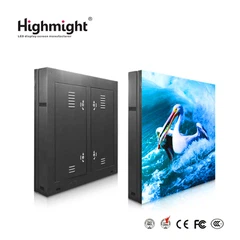

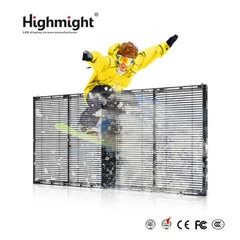


Hey there! As a supplier of Rent Indoor LED Screen, I often get asked about the power consumption of rental indoor LED screens. It's a crucial question, especially for event planners and businesses looking to manage their budgets and environmental impact. So, let's dive right in and break it down.
First off, the power consumption of an indoor LED screen isn't a one - size - fits - all number. It depends on several factors. One of the most significant factors is the screen's size. Just like a bigger TV uses more power than a smaller one, a larger LED screen will consume more electricity. For instance, a small 10 - square - meter indoor LED screen will use less power compared to a massive 50 - square - meter one.
The pixel pitch also plays a big role. Pixel pitch refers to the distance between the centers of two adjacent pixels on the screen. A smaller pixel pitch means more pixels are packed into a given area, which generally results in higher power consumption. High - resolution screens with a tight pixel pitch, like 1.2mm or 1.5mm, need more energy to drive all those individual pixels and produce sharp images.
Another factor is the brightness level. If you set your LED screen to maximum brightness, it's going to guzzle power. On the other hand, if you lower the brightness to a more reasonable level that still looks great in your indoor environment, you can save a significant amount of electricity. For example, in a dimly lit conference room, you don't need the screen to be as bright as it would be in a well - lit exhibition hall.


The type of content being displayed on the screen also affects power consumption. A static image with mostly dark colors will use less power than a dynamic video with lots of bright colors and fast - moving elements. This is because LEDs use more energy to produce bright colors, especially white. So, if you're showing a video with a lot of white backgrounds or bright animations, expect the power usage to be higher.
Now, let's talk about some rough estimates. On average, an indoor LED screen might consume around 300 - 600 watts per square meter. But remember, this is just a ballpark figure. A low - end, small - sized screen with a larger pixel pitch and set at a lower brightness could use as little as 200 watts per square meter. Meanwhile, a high - end, high - resolution screen running at full brightness might go up to 800 watts per square meter or more.
To put this into perspective, if you have a 20 - square - meter LED screen that consumes 400 watts per square meter, it will use 8000 watts (or 8 kilowatts) of power when it's running. If you run this screen for 8 hours a day, it will consume 64 kilowatt - hours (kWh) of electricity per day. At an average electricity cost of, say, $0.15 per kWh, that's $9.60 per day just for powering the screen.
But don't worry, there are ways to reduce power consumption. One simple way is to use our LED Rental Display Rental for Indoor Events with energy - saving features. Our screens come with built - in power management systems that can automatically adjust the brightness based on the ambient light in the room. This means the screen will use less power when it doesn't need to be as bright.
We also offer Custom Indoor LED Rental Display options. You can work with our team to design a screen that meets your specific needs in terms of size, pixel pitch, and brightness. This way, you can get a screen that provides the right level of performance without over - consuming power.
In addition to the energy - saving features, proper installation and maintenance are also important. Make sure the screen is installed in a well - ventilated area. Overheating can cause the LEDs to work harder and use more power. Regular maintenance, such as cleaning the screen and checking the power connections, can also ensure that the screen is operating efficiently.
If you're planning an indoor event or need an LED screen for your business, it's essential to factor in the power consumption when making your budget. But don't let the power usage scare you off. With our energy - efficient indoor LED screens, you can enjoy high - quality visuals without breaking the bank on electricity bills.
We understand that every event and business has unique requirements. That's why we're here to help you choose the right screen for your needs. Whether you're hosting a small corporate meeting or a large - scale exhibition, our team of experts can provide you with detailed information about the power consumption of different screen options and help you make an informed decision.
If you're interested in renting an indoor LED screen from us, we'd love to have a chat with you. You can reach out to us to discuss your project, get a customized quote, and learn more about how our screens can save you money on power while delivering top - notch performance. Let's work together to make your event or business a success with our high - quality, energy - efficient indoor LED screens.
References
- Industry reports on LED display technology and power consumption
- Internal research and testing data from our company on indoor LED screen power usage


