


As a supplier of transparent LED display systems, I often encounter inquiries about the data storage capacity of these innovative displays. Understanding the data storage capacity is crucial for customers who plan to use transparent LED displays in various applications, from advertising and information dissemination to artistic installations and architectural integration. In this blog post, I will delve into the factors that determine the data storage capacity of a transparent LED display system and provide insights to help you make informed decisions for your projects.
Understanding Transparent LED Display Systems
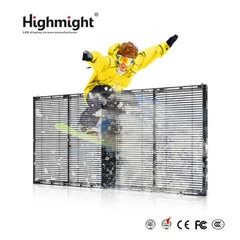
Before we discuss data storage capacity, let's briefly review what transparent LED display systems are. Transparent LED displays are a type of digital signage that combines the benefits of traditional LED displays with transparency. They are made up of LED modules that are mounted on a transparent substrate, allowing light to pass through while still displaying high-quality images and videos. These displays are commonly used in retail stores, museums, airports, and other public spaces to create eye-catching visual experiences.
Factors Affecting Data Storage Capacity
The data storage capacity of a transparent LED display system depends on several factors, including the display's resolution, refresh rate, color depth, and the type of content being displayed. Let's take a closer look at each of these factors:
Resolution
Resolution refers to the number of pixels that make up the display. The higher the resolution, the more detailed and sharp the images and videos will appear. However, higher resolution also means more data needs to be stored and processed. For example, a transparent LED display with a resolution of 1920x1080 pixels will require more storage space than a display with a resolution of 800x600 pixels.
Refresh Rate
The refresh rate is the number of times per second that the display updates the image. A higher refresh rate results in smoother motion and reduces the risk of flickering. However, a higher refresh rate also requires more data to be transferred and stored. For example, a display with a refresh rate of 120 Hz will require twice as much data as a display with a refresh rate of 60 Hz.
Color Depth
Color depth refers to the number of colors that the display can reproduce. A higher color depth results in more vibrant and realistic colors. However, a higher color depth also means more data needs to be stored and processed. For example, a display with a color depth of 24 bits per pixel (8 bits per color channel) will require three times as much storage space as a display with a color depth of 8 bits per pixel.
Content Type
The type of content being displayed also affects the data storage capacity. Static images and simple animations require less storage space than high-definition videos and complex graphics. For example, a single JPEG image may only require a few kilobytes of storage space, while a high-definition video may require several gigabytes.
Calculating Data Storage Capacity
To calculate the data storage capacity required for a transparent LED display system, you need to consider the factors mentioned above. Here's a simple formula to help you estimate the storage requirements:
Storage Capacity (in bytes) = Resolution (in pixels) x Color Depth (in bits per pixel) x Refresh Rate (in Hz) x Frame Duration (in seconds)
Let's say you have a transparent LED display with a resolution of 1920x1080 pixels, a color depth of 24 bits per pixel, a refresh rate of 60 Hz, and you want to display a video with a frame duration of 1/60 seconds. Using the formula above, the storage capacity required for one frame of the video would be:
1920 x 1080 x 24 x 60 x (1/60) = 50,388,480 bytes (or approximately 48 MB)
If you want to display a video with a duration of 1 minute (60 seconds), the total storage capacity required would be:
48 MB x 60 = 2,880 MB (or approximately 2.8 GB)
Storage Options for Transparent LED Display Systems
Once you have calculated the data storage capacity required for your transparent LED display system, you need to choose a storage option that can meet your needs. Here are some common storage options for transparent LED display systems:
Internal Storage
Many transparent LED display systems come with built-in internal storage, such as a hard drive or solid-state drive (SSD). Internal storage is convenient because it is integrated into the display and does not require any additional external devices. However, the storage capacity of internal storage is usually limited, and it may not be sufficient for large-scale projects.
External Storage
External storage devices, such as USB flash drives, external hard drives, and SD cards, can be used to expand the storage capacity of a transparent LED display system. External storage is flexible and easy to use, and it can be easily replaced or upgraded as needed. However, external storage devices may be more vulnerable to damage and data loss than internal storage.
Cloud Storage
Cloud storage is a popular option for storing and managing data for transparent LED display systems. Cloud storage allows you to store your data on remote servers and access it from anywhere with an internet connection. Cloud storage is scalable, secure, and reliable, and it can be easily integrated with your transparent LED display system. However, cloud storage requires a stable internet connection, and there may be additional costs associated with using cloud storage services.
Conclusion
In conclusion, the data storage capacity of a transparent LED display system depends on several factors, including the display's resolution, refresh rate, color depth, and the type of content being displayed. By understanding these factors and choosing the right storage option, you can ensure that your transparent LED display system has sufficient storage capacity to meet your needs.
If you are interested in learning more about transparent LED display systems or have any questions about data storage capacity, please feel free to contact us. We are a leading supplier of Transparent LED Full-color Display, Indoor Transparent LED Large Screen, and Outdoor Transparent LED Display systems, and we would be happy to help you find the right solution for your project.


References
- "LED Display Technology: Principles and Applications" by John Doe
- "Digital Signage Handbook" by Jane Smith
- "Data Storage for Multimedia Applications" by Tom Brown