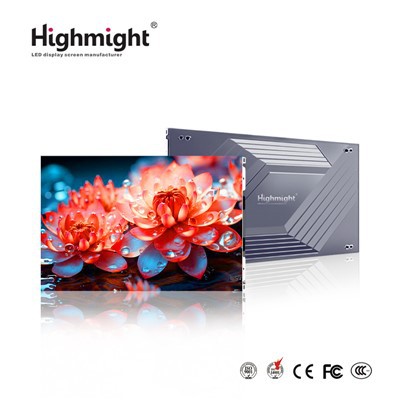

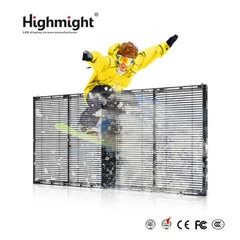


The LED crystal film screen adopts bare crystal ball planting technology, uses transparent crystal film film as the light board, etches transparent mesh circuit on the surface, then pastes components, and finally completes the production through vacuum sealing process. This unique design makes the LED crystal film screen have extremely high transparency, which can present bright and gorgeous image effects, making people shine.
Compared with traditional LED transparent screens and film screens, the structure of LED crystal film screen is unique. It breaks the standard frame concept of traditional transparent screens, and the product is more flexible and can be curled at will. Moreover, its installation method is extremely simple. It can be directly pasted on the inside of the glass, and can be cut arbitrarily according to the size of the glass, which neither destroys the original structure of the building nor affects the indoor lighting.
In terms of circuit board design, LED crystal film screens are usually composed of light boards and driver boards. There are two main design schemes on the market: one is the integration of lamp and driver, and the other is the separation of lamp and driver. The design of the integration of lamp and driver packages the LED lamp and the driver IC together, effectively avoiding the screen distortion problem caused by the inductance effect. The separation of lamp and driver is to place the LED lamp and the driver IC on two independent PCB boards respectively, and connect the signals through the pin and female plug-in method to ensure normal operation.
There are many reasons for adopting the separation of lamp and driver. For display screens using plug-in LEDs, since the LED lamp pins will affect the normal placement of the driver IC on the back, it is more appropriate to adopt the separation of lamp and driver. For LED display screens with small dot pitch, since the line routing of the PCB board in the electronic design is limited, the separation of lamp and driver can increase the wiring area of the PCB board. In addition, considering the heat dissipation problem without affecting the display effect of the LED, the separation of lamp and driver will also be selected. If the integration of lamp and driver is adopted, when the LED lamp density is very large (that is, the dot pitch is very small), the heat of the driver IC will be very high when it is working, causing the heat of the driver IC to be transferred through the PCB to the LED lamp facing the IC, causing the color of the LED lamp to change. The separation of lamp and driver can avoid this situation.
Nowadays, many LED crystal film screen companies have developed from lamp-driven integration to lamp-driven separation. Many companies have applied lamp-driven separation technology to crystal film screens, which effectively reduces the temperature of the screen body and increases the redundancy of screen control, providing the possibility of superimposing intelligent technology.
The application scenarios of LED crystal film screens are also more extensive. Whether in commercial display, advertising or home decoration, LED crystal film screens can be widely used with their excellent display effects and flexible installation methods. At the same time, with the continuous advancement of technology and the continuous expansion of application scenarios, it is believed that LED crystal film screens will exert greater potential in the future and bring more convenience and surprises to people's lives and work.