


Basic knowledge of LED display
Classification of LED display
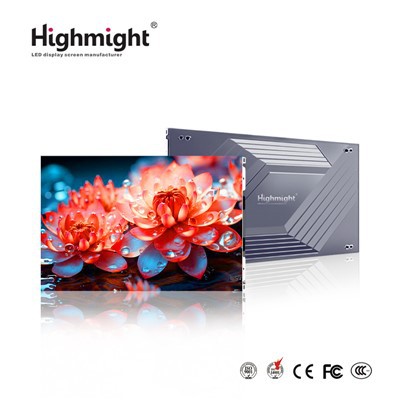
LED display screens can be divided into graphic display screens and video display screens, both of which are composed of LED matrix blocks. Graphic display screens can display Chinese characters, English text and graphics synchronously with computers; video display screens are controlled by microcomputers, with graphics, text and images, and play various information in a real-time, synchronous and clear information transmission method. They can also display two-dimensional and three-dimensional animations, videos, TV, VCD programs and live scenes. LED display screens display pictures with bright colors and strong three-dimensional sense. They are as quiet as oil paintings and as dynamic as movies. They are widely used in finance, taxation, industry and commerce, post and telecommunications, sports, advertising, factories and mines, transportation, education systems, stations, docks, airports, shopping malls, hospitals, hotels, banks, securities markets, construction markets, auction houses, industrial enterprise management and other public places.
LED display screens can display changing numbers, text, graphics and images. They can be used not only in indoor environments but also in outdoor environments. They have advantages that projectors, TV walls and LCD screens cannot match. The reason why LED has been widely valued and developed rapidly is inseparable from its own advantages. These advantages can be summarized as high brightness, low operating voltage, low power consumption, miniaturization, long life, impact resistance and stable performance. The development prospects of LED are extremely broad. At present, it is developing towards higher brightness, higher weather resistance, higher luminous density, higher luminous uniformity, higher reliability and full color.

Classification of LED display screens
Classification by primary color
Classification by display device
Classification by use occasion
Classification by the diameter of the light point
(2) Outdoor screen: PH5mm, PH6mm, PH8mm, PH10mm, PH12mm.
The basic unit of the outdoor screen is the light tube. The principle of the light tube is to seal a group of red, green and blue light-emitting diodes in a plastic tube to emit light together to enhance the brightness.
The display modes include static, horizontal scrolling, vertical scrolling and page turning display. A single module controls and drives 12 (up to 24) 8x8 dot matrices, a total of 16x48 dot matrices (32x48 dot matrices), which is 12 times (24 times) of a single MAX7219 (PS7219, HD7279, ZLG7289 and 8279 and other similar LED display driver modules). It can be "cascaded" to form any large dot matrix display screen. It has good display effect, low power consumption and lower cost than the circuit using MAX7219.

Shenzhen Highmight Technology Co., Ltd.
Professionally customized LED large screen, full indoor and outdoor coverage, free personalized design plan, click to get exclusive high-definition large screen solution to create a shocking visual experience!
LED display technical parameters
Pixel out-of-control rate
Pixel out-of-control rate refers to the proportion of the smallest imaging unit (pixel) of the display screen that is not working properly (out of control). There are two modes of pixel out-of-control: one is blind spot, that is, blind spot, which is not lit when it needs to be lit, called blind spot; the other is constant bright spot, which is always on when it needs to be off, called constant bright spot. Generally, the composition of pixels is 2R1G1B (2 red lights, 1 green light and 1 blue light, the same as below), 1R1G1B, 2R1G, 3R6G, etc., and out-of-control generally does not mean that the red, green and blue lights in the same pixel are all out of control at the same time, but as long as one of the lights is out of control, the pixel is considered out of control. For simplicity, we count and calculate the out-of-control pixels according to each primary color (red, green and blue) of the LED display screen, and take the maximum value as the pixel out-of-control rate of the display screen.
The ratio of the number of out-of-control pixels to the total number of pixels on the whole screen is called the "whole screen pixel out-of-control rate". In addition, in order to avoid the concentration of out-of-control pixels in a certain area, the concept of "regional pixel out-of-control rate" is proposed, that is, the ratio of the number of out-of-control pixels to the total number of regional pixels (10,000) in a 100x100 pixel area. This indicator quantifies the requirement of "out-of-control pixels are discretely distributed" in the "General Specification for LED Displays" SJ/T11141-2003, which is convenient and intuitive.
At present, domestic LED display screens will be aged (baked) before leaving the factory, and the LED lights of out-of-control pixels will be repaired and replaced. It is no problem to control the "whole screen pixel out-of-control rate" within 1/104 and the "regional pixel out-of-control rate" within 3/104. Some manufacturers' corporate standards even require that out-of-control pixels are not allowed before leaving the factory, but this will inevitably increase the manufacturer's manufacturing and maintenance costs and extend the delivery time. In different application scenarios, the actual requirements for pixel out-of-control rate can vary greatly. Generally speaking, if the LED display screen is used for video playback, it is acceptable and achievable to control the index requirement within 1/104; if it is used for simple character information release, it is reasonable to control the index requirement within 12/104.

Grayscale

Brightness identification level
Nonlinear transformation
Explanation of Common Terms for LED Display Screens
LED Brightness
LED Pixel Module
Pixel and Pixel Diameter
Dot Pitch, Pixel Density and Information Capacity
Resolution
LED Display Panel
Grayscale
Dual-primary color
Full color
Color
The display screen that puts red and green LEDs together as a pixel is called a two-color screen or a color screen; the display screen that puts red, green and blue LED tubes together as a pixel is called a three-color screen or a full-color screen.
VGA input interface
| Foot position | Pin Name | definition |
| 1 | RED | Red signal (75Ω, 0.7V peak-to-peak) |
| 2 | GREEN | Green signal (75Ω, 0.7V peak-to-peak)/monochrome grayscale signal (single display) |
| 3 | BLUE | Blue signal (75Ω, 0.7V peak-to-peak) |
| 4 | RES | reserve |
| 5 | GND | Self-test terminal, connected to computer ground |
| 6 | RGND | Red ground |
| 7 | GGND | Green ground/monochrome grayscale signal ground (single display) |
| 8 | BGND | Blue ground |
| 9 | NC/DDC5V | Unused DDCSV |
| 10 | SGND | Synchronous grounding |
| 11 | ID | Used for color LCD screen detection |
| 12 | ID/SDA | Monochrome LCD screen detection/serial data SDA |
| 13 | HSYNC/CSYNC | Line sync signal/composite sync signal |
| 14 | VSYNC | Field sync signal |
| 15 | ID/SCL | LCD color TV detection/serial clock |
 Figure 1-2 DVI-D interface appearance and pin definition
DVI input interface

| Pinout | Function | Pinout | Function |
| 1 | TMDS data 2- | 6 | DDC clock |
| 2 | TMDS data 2+ | 7 | DDC data |
| 3 | TMDS data 2/4 shield | 8 | Vertical sync signal |
| 4 | TMDS data 4- | 9 | TMDS data 1 |
| 5 | TMDS data 4+ | 10 | TMDS data 1+ |
| 11 | TMDS data 1/3 shield | 21 | TMDS data 5+ |
| 12 | TMDS data 6- | 22 | TMDS data clock shield |
| 13 | TMDS data 3+ | 23 | TMDS clock+ |
| 14 | DDC+5V | 24 | TMDS clock- |
| 15 | Ground | C1 | Analog R signal |
| 16 | Hot plug input detection, used to send hot plug signal to the host | C2 | Analog G signal |
| 17 | TMDS data 0- | C3 | Analog B signal |
| 18 | TMDS data 0 | C4 | Horizontal sync signal |
| 19 | TMDS data 0/5 shield | C5 | Analog ground |
| 20 | TMDS data 5- |

Pixels
Display speed
Communication distance
Lifespan

Shenzhen Highmight Technology Co., Ltd.
Professionally customized LED large screen, full indoor and outdoor coverage, free personalized design plan, click to get exclusive high-definition large screen solution to create a shocking visual experience!
Various LED display screens
LED indoor screen
LED indoor screen is an indoor display device that uses light-emitting diodes (LEDs) as display elements and is widely used in commercial, educational, cultural and entertainment scenarios.

1. Core features
High brightness and color performance: moderate brightness (usually 200-1500nit), avoids excessive glare indoors, supports high color gamut (such as DCI-P3), and true color reproduction.
Resolution and dot spacing: small pitch LED (P0.9-P3mm) achieves high-definition display, suitable for close viewing (such as conference rooms, exhibition halls).
Low blue light and eye protection: Some models use blue light suppression technology to reduce visual fatigue and are suitable for long-term use.
2. Common types
Small pitch LED screen: mainstream choice, such as P1.2/P1.5, seamless splicing, suitable for command and control rooms, high-end retail, conference rooms, etc.
COB/SMD packaging: improves reliability and anti-collision performance, suitable for high-interaction scenarios (such as schools, shopping malls, etc.).
Flexible indoor LED screen: bendable design for creative display (such as cylindrical screen, curved stage background).
3. Technical parameter analysis
Refresh rate: ≥3840Hz reduces the stripe phenomenon during shooting, suitable for live broadcast scenes.
Contrast: static contrast ≥5000:1, enhances the dark field detail performance.
Grayscale level: 16bit+ processing power, smooth gradient without fault.
4. Application scenario case
Enterprise field: All-in-One smart screen in conference room (supports wireless projection + video conferencing).
Cultural and museum exhibition hall: transparent LED screen (transparency 70%+) combined with physical exhibition.
Virtual production: film and television grade LED studio (matching the low latency requirements of virtual production).
5. Selection considerations
Environmental adaptation: low brightness and high gray technology ensures the sense of hierarchy in dark environments.
Maintenance cost: front maintenance design saves space, modular power supply simplifies maintenance.
System integration: Supports HDMI 2.1 and SDI professional interfaces, and is compatible with mainstream control systems.
6. Development trend
Micro LED commercialization: Micro-pitch screens below P0.6 are gradually mass-produced.
Interactive integration: Combine touch and AI cameras to achieve somatosensory interaction.
Energy efficiency upgrade: Driver IC power consumption is reduced by 30%, meeting green building standards.
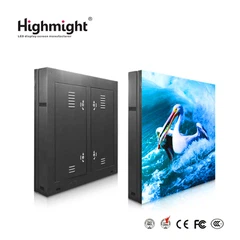
LED outdoor screen
LED outdoor display is a high-brightness, high-weather-resistant digital display device for outdoor environments. It is widely used in advertising, stadiums, traffic information release, stage activities and other scenes. The following is a brief introduction to its core features and applications:

1. Core features
High brightness: The brightness can usually reach 5000~10,000 nits (nit), ensuring that it is still clearly visible under direct sunlight.
Waterproof and dustproof: IP65/IP66 grade protection is adopted to resist outdoor harsh environments such as rain and dust.
Wide viewing angle: The horizontal/vertical viewing angle can reach 140°~160° to meet the needs of multi-angle viewing.
High refresh rate: ≥1920Hz, to avoid flickering or stripes when shooting.
Strong weather resistance: adapt to the temperature range of -30℃~60℃, anti-ultraviolet and anti-corrosion.
Modular design: support splicing into any size, convenient maintenance (such as magnetic suction or front maintenance design).
2. Main types
By pixel pitch:
P2.5~P10: small pitch, suitable for close viewing (such as shopping mall advertising screens).
P10~P20: medium and large pitch, used in long-distance scenes such as squares and stadiums.
By packaging technology:
Surface mount (SMD): uniform color, wide viewing angle, commonly used in high-definition screens.
Direct plug-in (DIP): higher brightness, mostly used for traffic screens and large-pitch displays.
3. Application scenarios
Commercial advertising: dynamic content display such as building advertising and station light boxes.
Sports events: real-time scores and live broadcasts at venues.
Traffic information: highway signs, bus arrival information.
Stage activities: concerts, celebration background screens.
Smart cities: emergency notifications, public information releases.
4. Advantages and challenges
Advantages:
Long life (about 100,000 hours), lower energy consumption than traditional neon lights.
Support remote control, real-time content updates.
Dynamic display attracts attention and improves advertising effect.
Challenges:
The initial cost is high and requires professional installation and maintenance.
Heat dissipation and protection design need to be considered.
5. Key points for purchase
Environmental adaptability: Select the protection level according to the local climate.
Resolution and viewing distance: The smaller the pixel pitch, the better the close viewing effect (such as P4 is suitable for viewing within 5 meters).
Brand and after-sales: Choose manufacturers with mature cases (such as Leyard, Unilumin, Highmight, etc.).
LED Rental Screen
LED rental screen is a detachable and reusable display screen designed for temporary activities. It is widely used in stage performances, exhibitions, conferences, sports events and other scenes. The following is a brief introduction to its core features and applications:

1. Main features
Modular design
It is composed of multiple boxes (modules) and supports fast installation and disassembly to meet the needs of different venues.
Common box sizes: 500×500mm, 500×1000mm, etc., with light thickness (such as within 100mm).
High brightness and high refresh rate
High brightness (5000-10000nit): Adapt to outdoor strong light environment, the picture is clear and visible.
High refresh rate (≥3840Hz): Reduce strobe during shooting, suitable for live broadcast and photography.
Lightweight and portable
Adopt aluminum frame or carbon fiber material, light weight (such as 10-20kg/box), easy to transport.
Support front/rear maintenance, saving labor costs.
Flexible configuration
Pixel pitch (P2-P8) is optional, balancing clarity and viewing distance.
Arc and special-shaped splicing capabilities meet creative stage design.
Stability
Dust-proof and shock-proof design, adapt to frequent disassembly and assembly; support 7×24 hours of continuous work.
2. Application scenarios
Stage performances: background screens, floor screens, interactive devices.
Commercial activities: exhibitions, press conferences, shopping mall promotions.
Sports events: real-time playback, advertising.
Rental companies: multiple rentals to reduce customers' one-time investment costs.
3. Differences from traditional LED screens
| Features | Rental screen | Fixed installation screen |
| Structure | Lightweight, quick-disassembly design | Heavy, fixed installation |
| Use scenarios | Short-term activities | Long-term fixed (such as billboards) |
| Maintenance | Supports front and back maintenance | Usually only rear maintenance |
| Cost | Leasing model, low customer investment | One-time purchase required |
4. Key points for purchase
Pitch selection: P2.5-P3 is suitable for close viewing (such as stage), P4-P5 is suitable for long distance (such as gymnasium).
Brightness requirement: 1000-3000nit for indoor use, ≥5000nit for outdoor use.
Brand and service: Nova, Barco, Leyard and other brands provide technical support.
Supporting system: confirm whether the control system, power supply and transport bracket are complete.
5. Development trend
Smaller spacing: improve close-up clarity (such as P1.8 rental screen).
Lightweight: new materials reduce transportation costs.
LED floor tile screen
LED floor tile screen is a high-strength, high-protection LED display screen designed for ground display. It adopts modular splicing to form an interactive ground display system. Its load-bearing, anti-skid, and waterproof characteristics are superior to conventional LED screens, and are suitable for scenes such as stages, exhibition halls, and commercial spaces.
1. Core features
High load-bearing capacity: a single screen can bear more than 1-2 tons, suitable for crowds or equipment crushing.
Strong protection: IP65/67 waterproof and dustproof, anti-slip surface treatment (frosted or special coating).
Interactive function: optional pressure sensor, radar or infrared sensor to achieve human-screen interaction (such as footsteps triggering special effects).
High brightness and refresh rate: adapt to strong light environment, low refresh rate to reduce stripes during shooting.
Quick installation: modular design, support front/rear maintenance, and flexible splicing of special-shaped ground.
2. Application scenarios
Stage performances: dynamic ground backgrounds for concerts and evening parties (such as virtual waves and crack special effects).
Commercial display: interactive advertising in shopping malls and brand showrooms (trampling trigger information).
Cultural tourism projects: immersive experience channels in theme parks and museums.
Weddings/events: customized wedding floor screens, exhibition interactive floors.
3. Technical parameters
Pixel pitch (Pitch): Common P3.9-P10, selected according to viewing distance.
Brightness: 1500-5000nit (higher brightness is required for outdoor use).
Thickness: ultra-thin design (≤50mm) or thickened and reinforced.
Control system: supports synchronous/asynchronous control, compatible with multimedia interactive software.
4. Advantages vs traditional LED screens
Safety: tempered glass or polycarbonate panel, strong impact resistance.
Stability: fanless silent design, optimized heat dissipation, long-term operation without lag.
Creativity: can be combined with AR and somatosensory technology to create a dynamic interactive experience.
5. Notes
It needs to be used outdoors with a waterproof box or bracket.
Long-term trampling may cause brightness decay and requires regular maintenance.
Ensure that the ground is flat during installation to avoid uneven force on the module.
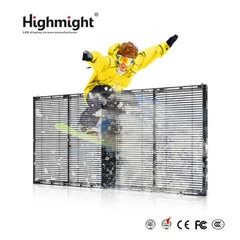
LED transparent screen
LED transparent screen is a display device designed with high light transmittance technology. Through a special process, LED light strips (or lamp beads) are embedded in a transparent substrate (such as glass or acrylic), and dynamic image display is achieved while maintaining high transparency. Its transparency can usually reach 50%-90%, taking into account the balance between transparency and display.
1. Core features
High transparency: The screen is almost invisible when not displayed, does not affect lighting and sight, and is suitable for scenes such as windows and building curtain walls.
Light and thin design: The thickness can be controlled within 10mm, and the weight is only 30% of the traditional LED screen, saving space.
Energy saving and environmental protection: Low power consumption (about 30% of traditional screens), support modular maintenance, and reduce maintenance costs.
Flexible installation: Can be attached to windows, hung or embedded in glass curtain walls, support curved surface customization, and adapt to diverse building structures.
2. Technical parameters
Pixel pitch (Pitch): Common 3.9mm, 7.8mm, etc. The larger the pitch, the higher the transparency, but the lower the clarity.
Brightness: 1500-6000nit, suitable for indoor (such as shopping malls) or outdoor (such as glass curtain walls) environments.
Refresh rate: ≥3840Hz, reducing the flicker problem during shooting.
3. Application scenarios
Retail display: shopping mall window advertising, combining virtual and real to enhance consumer experience (such as the dynamic shoe display of Nike flagship store).
Architectural media: glass curtain walls transform into urban digital landscapes (such as the transparent screen landmark of Shanghai Bund).
Stage technology: transparent background screens for concerts to enhance three-dimensional visual effects (such as Spring Festival Gala stage applications).
Transportation hubs: transparent information screens at airports and subway stations, taking into account both guidance functions and spatial transparency.
4. Development trends
Micro LED technology: the next generation solution with smaller spacing and higher light transmittance.
Intelligent interaction: combined with touch or AR technology to achieve human-screen interaction.
Carbon neutral design: the application of solar power supply and recyclable materials promotes the development of green display.
5. Comparison with traditional LED screens
| Characteristics | LED transparent screen | Traditional LED screen |
| Transparency | 50%-90% | 0% |
| Weight (㎡ | ≤12kg | ≥30kg |
| Installation complexity | Simple, can be disassembled independently | Steel frame structure required |
| Maintenance cost | Modular replacement, low | Overall disassembly, high |
LED crystal film screen
LED crystal film screen is a new type of flexible LED display technology, which combines the thin and light characteristics of film with the high brightness and high contrast advantages of LED. It is widely used in commercial display, stage creativity, architectural decoration and other fields. The following is a brief introduction to its core features and applications:

1. Technical features
Ultra-thin and flexible: only 2mm thick, can be bent, folded, curled, and adapted to cylindrical, curved and other special-shaped surfaces.
Lightweight: The weight is more than 70% lighter than traditional LED screens (about 3-5kg/㎡), suitable for load-bearing scenes such as glass curtain walls and ceilings.
High light transmittance: The light transmittance can reach 60%-90%, and it does not affect indoor lighting after installation. It is often used for window display or architectural glass.
Modular design: supports splicing into large-area screens, seamless connection, and convenient maintenance.
Energy saving and environmental protection: low power consumption, some models support passive heat dissipation, no fan noise.
2. Core advantages
Flexible installation: can be directly attached to transparent media such as glass and acrylic without complex steel structure.
High brightness: 5000-8000nit, adapt to strong light environment (such as outdoor advertising).
Wide viewing angle: horizontal/vertical viewing angle can reach 160°, ensuring clear viewing from multiple angles.
Creative display: support dynamic video, 3D effect, enhance visual impact.
3. Application scenarios
Commercial display: shopping mall window (transparent screen), brand store interactive window.
Stage performance: concert background, TV station virtual shooting (replacing traditional green screen).
Architectural decoration: building facade light show, glass curtain wall advertising.
High-end conference: transparent conference screen, immersive exhibition hall.
Car display: dynamic information display on concept car windows.
4. Comparison with traditional LED screen
| Features | LED crystal film screen | Traditional LED screen |
| Thickness | <2mm | 50-100mm |
| Weight | 3-5kg/㎡ | 15-30kg/㎡ |
| Light transmittance | High (transparent or translucent) | Opaque |
| Installation method | Magnetic/adhesive/embedded | Fixed with steel structure |
| Curvature adaptability | Support bending | Only for flat or fixed arc |
5. Precautions
High cost: The unit price is about 1.5-2 times that of traditional LED screen, but it saves installation and maintenance costs.
Environmental requirements: Avoid sharp objects scratching the film surface, and waterproof treatment is required for outdoor use.
Resolution limitation: Currently mainly P2.5-P10, and small pitch models are required for close viewing.
LED soft module
1. Features of LED soft modules
Flexible substrate
Using FPC (flexible circuit board) or similar materials as the substrate to replace the traditional hard PCB, the module can be bent and curled to adapt to complex installation environments.
Lightweight design
The thickness is usually only a few millimeters and the weight is light, which is suitable for scenes with high load-bearing requirements (such as building curtain walls and car advertising).
High adaptability
It can fit cylindrical, spherical, wavy and other special-shaped structures to achieve creative display effects that traditional hard modules cannot achieve.
Modular splicing
Supports seamless splicing, quick installation through magnetic suction, snap-on or pasting, and easy maintenance and replacement.
Protection performance
Most products have a protection level of IP65 and above, are waterproof and dustproof, and are suitable for outdoor use (such as stages and shopping mall exterior walls).
2. Main technical parameters
Pixel pitch (Pitch): Common P2.5, P3, P4, etc. The smaller the pitch, the higher the resolution.
Brightness: Usually ≥5000nit outdoors, 1500-3000nit indoors.
Refresh rate: ≥1920Hz, to avoid flickering when shooting.
Bending radius: Minimum 10-30mm (depending on the model).
3. Application scenarios
Commercial display
Shopping mall curved screen, cylindrical advertising screen, brand creative window.
Stage performance
Concert background screen, special-shaped stage device.
Architectural decoration
Building facade light show, dome display.
In-vehicle display
Curved advertising screen in buses and subways.
High-end retail
Luxury store curved display screen, interactive floor tile screen.
4. Comparison with traditional hard modules
| Features | LED soft modules | Traditional hard modules |
| Substrate materials | Flexible FPC | Hard PCB |
| Flexibility | Supports large-angle bending | Unbendable |
| Installation scenarios | Special-shaped curved surfaces, irregular structures | Flat surfaces or simple corners |
| Weight | Light (about 1/3 of hard modules) | Heavier |
| Cost | Higher | Lower |
5. Precautions
Heat dissipation design: The heat dissipation capacity of flexible modules is weak, and long-term high-brightness operation should be avoided.
Splicing accuracy: Pay attention to the alignment between modules during bending installation to avoid pixel misalignment.
Maintenance cost: Flexible products may be more difficult to repair than hard modules, so it is recommended to choose a reliable brand.
LED special-shaped screen
LED special-shaped screen (also known as creative LED screen or irregular LED screen) is a special form of LED display screen that is different from the traditional rectangular screen. It breaks the conventional rectangular boundary through modular design and flexible splicing methods to form geometric or free shapes such as circles, arcs, waves, cubes, etc. It is widely used in advertising, stage, architectural decoration and other fields to enhance visual impact and artistic expression.
1. Core features
Free shape: can be customized into complex structures such as circles, arcs, cylinders, triangles, waves, and even 3D stereoscopic shapes (such as spheres and spirals).
Adapt to special installation environments (such as architectural curved surfaces, stage backgrounds).
Modular design: small-size LED modules (such as triangles and diamonds) are used for splicing, and seamless connection is achieved through software correction. Support flexible substrate or hollow design to achieve lightweight or light-transmitting effects.
High adaptability: can be deeply integrated with architectural structures, stage devices, and commercial spaces, combining functionality and aesthetics.
Technical challenges: Dedicated control systems and correction software are required to solve the problem of image deformation after splicing (such as point-to-point mapping, image distortion correction).
2. Main types
| Type | Description | Application scenarios |
| Curved screen | Horizontally or vertically curved, fit cylindrical buildings or stages | Shopping mall atrium, concert stage |
| Circular screen | 360° full-view display, commonly used for hoisting or ground installation | Brand exhibition halls, sports stadiums |
| Cube screen | Polyhedron combination to achieve 3D stereoscopic effect | Science and technology museums, retail stores digital art installations |
| Hollow screen | The screen body has light-transmitting holes to reduce weight and retain ventilation/lighting functions | Building curtain walls, indoor partitions |
| Flexible screen | Can be bent and folded to adapt to irregular surfaces | Car display, stage special effects |
3. Application areas
Commercial display: creative advertising of brand flagship stores and exhibition halls.
Stage performance: dynamic visual effects of concerts and theater backgrounds.
Architectural decoration: landmark building facade lighting or information display.
Cultural tourism projects: immersive experience in theme parks and museums.
Retail space: window display, interactive installations.
4. Technical difficulties
Image processing: point-by-point correction and video source adaptation are required to solve the problem of image stretching caused by special-shaped splicing.
Structural design: balance strength and weight to ensure the stability of complex shapes.
Heat dissipation and maintenance: special-shaped structures may affect the heat dissipation path, and the module layout needs to be optimized.
5. Advantages vs traditional LED screens
Dimensions Special-shaped screens Traditional rectangular screens
Aesthetics High (customized shape) Conventional
Adaptability Strong (fitting complex space) Limitations
Cost High (design + technical difficulty) Low
Maintenance More complex (module non-standard) Simple
6. Future trends
Lighter and thinner: use Micro LED or COB technology to improve resolution and flexibility.
Intelligence: combine sensors to achieve interaction (such as touch, somatosensory control).
Virtual fusion: combine with AR/VR to create immersive scenes.
about Us

Customer-oriented, teamwork, pursuit of excellence
Shenzhen Highmight Technology Co., Ltd. was established in 2010. Since its establishment, it has always focused on the field of LED applications. It is a high-tech enterprise integrating design, production, sales and service for LED video display. It now has more than 100 authorized national patents. In 2020, the Guangzhou branch was established to further improve Highmight's national sales layout and after-sales service system. The company adheres to the business philosophy of "customer orientation, teamwork, pursuit of excellence" to provide value-for-money LED video large-screen products and solutions for global audio-visual customers.
Continuous innovation to create core competitiveness
Highmight has always insisted on creating core competitiveness through R&D innovation, has been increasing R&D investment and continuously committed to technological innovation, and invests 20% of its turnover in R&D each year. The company has a multidisciplinary and cross-professional comprehensive R&D team of more than 50 people. The successful independent innovative products mainly involve independent patented transparent screen series that meet relevant certification requirements, high-resolution, efficient, energy-saving and reliable indoor and outdoor LED display screen series, floor tile screen series, chain bar series, ultra-high density and small-pitch LED display screen series that are ahead of peers, creative special-shaped customized LED display screens, COB MINI flip series, OEM/ODM OEM for customers, etc. and corresponding application solutions for the above products. The market share of various products exceeds 50%.
Deeply cultivate the AV display field and establish a century-old reputable brand
Since its establishment, Highmight has undertaken more than 10,000 LED display projects worldwide and has developed into a leader in the field of LED large-screen display engineering. It has established a good brand reputation in the industry. Its products have extensive customer resources and good reputation in road transportation, civil aviation transportation, military, radio and television, energy, commercial real estate, government agencies, sports venues, advertising media, financial institutions, industrial and commercial enterprises, big data visualization series, entertainment bars, party KTV, and other market segments.

Shenzhen Highmight Technology Co., Ltd.
Professionally customized LED large screen, full indoor and outdoor coverage, free personalized design plan, click to get exclusive high-definition large screen solution to create a shocking visual experience!