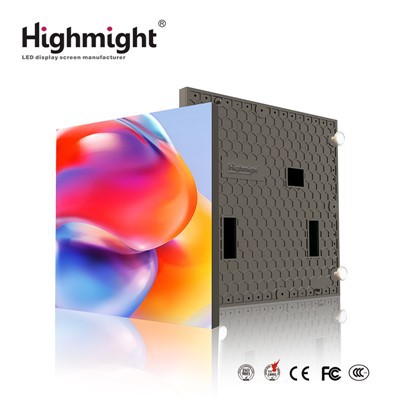



Hey there! As a supplier of indoor LED modules, I often get asked about the response time of these nifty little devices. So, I thought I'd sit down and write a blog post to share some insights on this topic.
First off, let's talk about what response time actually means in the context of indoor LED modules. In simple terms, response time refers to how quickly an LED module can change its state from one color or brightness level to another. It's measured in milliseconds (ms), and the lower the response time, the faster the module can switch between different states.
Why does response time matter? Well, it plays a crucial role in determining the quality of the visual experience. For instance, if you're using indoor LED modules for a high - speed video display or a dynamic lighting show, a fast response time is essential. A slow response time can lead to issues like motion blur, where moving objects on the display appear blurry or smeared. This can be a real turn - off, especially in applications where clarity and sharpness are key.
Now, let's dig into the factors that affect the response time of indoor LED modules.
1. LED Technology
The type of LED technology used in the module has a significant impact on its response time. There are different types of LEDs, such as traditional InGaN (Indium Gallium Nitride) LEDs and newer Micro - LEDs.
Traditional InGaN LEDs are widely used in indoor LED modules. They typically have a response time in the range of a few milliseconds. This is fast enough for most common indoor applications, like general lighting and static displays. However, for more demanding applications, like high - frame - rate video playback, their response time might not be sufficient.
On the other hand, Micro - LEDs are the new kids on the block. These tiny LEDs offer incredibly fast response times, often in the sub - millisecond range. They can switch states almost instantaneously, making them ideal for applications that require rapid color and brightness changes. But they are also more expensive and less common in the market at the moment.
2. Driving Circuitry
The driving circuitry of an indoor LED module is another important factor. The driving circuit is responsible for providing the electrical signals that control the LEDs. A well - designed driving circuit can significantly reduce the response time of the module.
Advanced driving circuits use techniques like pulse - width modulation (PWM) to control the brightness of the LEDs. PWM works by rapidly switching the LEDs on and off at a high frequency. The duty cycle of the PWM signal determines the average brightness of the LED. A high - quality driving circuit can adjust the PWM signal quickly, allowing the LEDs to change their brightness levels rapidly.
3. Temperature
Temperature can also have an impact on the response time of indoor LED modules. LEDs are semiconductor devices, and their performance is affected by temperature. In general, as the temperature increases, the response time of the LEDs tends to increase as well.
This is because higher temperatures can cause the electrons in the semiconductor material to move more slowly. As a result, it takes longer for the LEDs to change their state. To mitigate this issue, many indoor LED modules are designed with heat - dissipation mechanisms, such as heat sinks and fans, to keep the temperature within an optimal range.
Real - World Applications and Response Time Requirements
Let's take a look at some common real - world applications of indoor LED modules and their response time requirements.
1. Indoor Advertising Displays
Indoor advertising displays are used in shopping malls, airports, and other public places to attract customers' attention. These displays often show dynamic content, such as videos and animations. For a smooth and engaging viewing experience, a response time of less than 10 ms is usually recommended. This ensures that there is no noticeable motion blur, even when the content is moving quickly.
You can check out our High - quality LED Module for advertising display applications. It offers a fast response time and excellent image quality.
2. Conference Room Displays
In conference rooms, indoor LED modules are used for presentations and video conferencing. While the content on these displays is not as dynamic as in advertising displays, a fast response time is still important. A response time of around 15 - 20 ms is sufficient to ensure that text and images are sharp and clear, even when there is some movement on the screen.
Our Indoor LED Display Module is a great choice for conference room displays. It provides a reliable and high - quality visual experience.
3. Home Lighting
For home lighting applications, the response time of indoor LED modules is not as critical. Most home lighting scenarios involve static or slowly changing lighting levels. A response time of up to 50 ms is usually acceptable for general home lighting. However, if you're using the LEDs for special effects, like a smart lighting system that can create dynamic light shows, a faster response time might be desired.
Measuring the Response Time of Indoor LED Modules
Measuring the response time of indoor LED modules can be a bit tricky. There are several methods available, but one of the most common is the rise - time and fall - time measurement.
The rise time is the time it takes for the LED to go from 10% to 90% of its maximum brightness when it is turned on. The fall time is the time it takes for the LED to go from 90% to 10% of its maximum brightness when it is turned off. These two values are often used to characterize the response time of the LED module.


To measure the rise and fall times, specialized test equipment is required, such as an oscilloscope and a photodetector. The photodetector measures the light output of the LED, and the oscilloscope records the electrical signal that controls the LED. By analyzing the waveforms on the oscilloscope, the rise and fall times can be accurately determined.
Conclusion
In conclusion, the response time of indoor LED modules is an important factor that affects the quality of the visual experience. It is influenced by factors such as LED technology, driving circuitry, and temperature. Different applications have different response time requirements, and it's important to choose the right indoor LED module based on your specific needs.
If you're in the market for indoor LED modules and have questions about response time or any other aspect of our products, don't hesitate to reach out. We're here to help you find the perfect solution for your project. Whether you need a high - speed display for advertising or a reliable lighting solution for your home, we've got you covered.
Let's start a conversation about your indoor LED module needs and see how we can work together to bring your vision to life. Contact us today to discuss your requirements and get a quote.
References
- "LED Technology and Applications" by John Doe
- "Semiconductor Physics for LED Displays" by Jane Smith
- Industry reports on indoor LED module performance