


Core Definition of LED Dynamic Pixel Technology
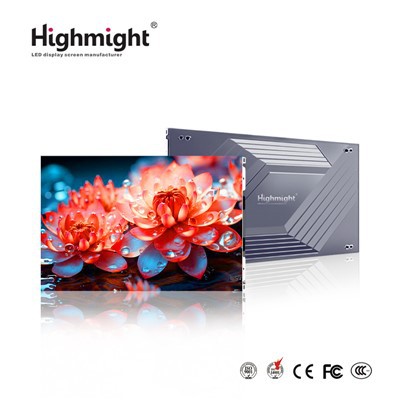
LED dynamic pixel technology refers to a display technology that achieves dynamic visual effects by precisely controlling the brightness, color, flicker frequency, and timing of each LED light-emitting unit (pixel). Its core lies in upgrading the "static pixels" of traditional LED displays into independently programmable and controllable "dynamic units," thereby supporting complex scenarios such as video playback, animation rendering, and real-time interaction.
Technical Principles: Coordinated Control from Hardware to Software
1. Hardware Architecture Basics
Pixel Unit: Composed of LED beads (such as SMD, COB packages), driver chip, and heat dissipation structure. Each pixel can independently receive electrical signals and emit light.
Driver Circuit: Employs constant current driving method, adjusting LED brightness through PWM (Pulse Width Modulation) technology to achieve 16-bit or higher grayscale levels (e.g., 65536 levels).
Control System: Divided into a main control board (processing video signals) and sub-control boards (allocating pixel data), transmitting commands via protocols such as SPI, CAN, and TCP/IP.
2. Implementation Logic of Dynamic Display
Timing Control: A high refresh rate (e.g., ≥3840Hz) ensures smooth visuals and avoids motion blur (e.g., high-speed footage in live sports broadcasts).
Color Mixing: Each pixel is composed of RGB three-primary-color LEDs, achieving over 16.7 million colors (e.g., sRGB color gamut coverage) through different brightness ratios.

Real-time data access: Supports input via interfaces such as HDMI, SDI, and DVI, or connects to devices such as sensors and cameras via API to achieve dynamic data visualization (such as weather data and population heat maps).
Core Technology Features and Advantages
| Dimension | Technical features | Advantages of LED displays compared to traditional LED displays |
|
Pixel independence |
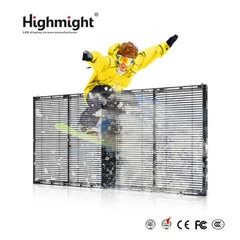
Each pixel can be programmed independently, supporting arbitrary shape splicing (such as curved and irregular screens), breaking through the limitations of rectangular frames. |
Traditional displays only support full-screen synchronous control and cannot achieve local dynamic effects. |
|
Dynamic response |
With a response time of less than 1ms, it can capture high-speed motion images (such as racing cars and fireworks) without ghosting. |
Traditional LCDs have a response time of about 5-10ms, making them prone to blurring in dynamic scenes. |
|
Traditional LCDs have a response time of about 5-10ms, making them prone to blurring in dynamic scenes. |
It supports automatic brightness adjustment from 0-5000cd/m², adapting to both outdoor strong light and indoor low light environments (such as billboards that switch between day and night). |
Traditional displays have a fixed brightness, which can lead to glare or excessive darkness in outdoor environments. |
|
Energy consumption and lifespan |
Using energy-saving driver chips, power consumption is reduced by more than 30% compared to traditional technologies, and the LED lifespan reaches 100,000 hours (approximately 11 years). |
Traditional technologies consume a lot of power and have a lifespan of about 50,000 to 80,000 hours. |
Typical Application Scenarios
1. Commercial and Advertising Sector
Naked-eye 3D Large Screens: Such as the naked-eye 3D panda screen in Chengdu Taikoo Li, which creates a stereoscopic visual effect through dynamic pixel parallax control. Interactive Advertising Installations: User gestures or actions can trigger dynamic pixel changes (e.g., pixels move when touched on a wall).
2. Cultural and Entertainment Sector
Stage Performances: LED floor tile screens at concerts support real-time linkage between dancers' movements and pixel lighting (e.g., the "Light and Shadow Matrix" at Jay Chou's concerts). Immersive Exhibition Halls: The Palace Museum's digital exhibition hall uses a surround dynamic pixel screen to recreate the dynamic changes of historical scenes (e.g., ancient paintings depicting the changing seasons).
3. Urban and Public Spaces
Architectural Media Facades: The Bund building complex in Shanghai uses dynamic pixel lights on its exterior walls to present festival-themed animations (e.g., Chinese zodiac animal patterns for the Spring Festival). Traffic Guidance: Smart traffic screens display real-time traffic data (e.g., traffic density is represented by pixel color depth).
4. Emerging Technology Fields
VR/AR Expansion: Dynamic pixel helmets project virtual images onto the retina using microdisplay technology (such as Meta's Cambria headset). Smart Wearables: Flexible dynamic pixel wristbands can display real-time heart rate waveforms or notification icons.
Technological Evolution and Cutting-Edge Trends
Mini LED and Micro LED Integration:
Mini LED (chip size 50-200μm) improves image quality through smaller pixel pitch (below P0.5), as seen in the Apple Pro Display XDR.
Micro LED (chip < 50μm) enables seamless splicing of self-emissive pixels, potentially replacing OLED for ultra-large screen applications (such as Samsung's The Wall series).
AI-Powered Dynamic Control: Machine learning predicts viewer attention and automatically adjusts pixel brightness and color (e.g., cinemas optimize contrast based on screen content).
Combined with computer vision, dynamic pixel screens can recognize viewer expressions in real time and provide interactive feedback (e.g., the "emotion response wall" in amusement parks).
Green Technology Upgrades: Utilizing gallium nitride (GaN) driver chips reduces power consumption while improving heat dissipation efficiency, making it suitable for high-temperature outdoor environments.
Technical Parameters and Selection Reference
|
parameter |
Common range |
Application scenario suggestions |
|
Pixel pitch (P) |
P0.3-P20 |
Indoor close-range (P<2), outdoor long-range (P≥3) |
|
refresh rate |
1920Hz-7680Hz |
Broadcast-grade requirements (≥2880Hz), commercial-grade requirements (≥1920Hz) |
|
brightness |
500-5000 cd/m² |
Indoor (500-1500), Outdoor (3000-5000) |
|
Gray levels |
14-16 bits (16384-65536 levels) |
Cinematic-quality images require 16-bit resolution, while 14-bit resolution is sufficient for ordinary scenes. |
LED dynamic pixel technology breaks through the limitations of traditional displays by enabling "pixel intelligence." The entire chain of upgrades, from hardware drivers to software algorithms, makes it a key medium connecting the physical world and digital content. With the integration of Mini/Micro LED, AI control, and other technologies, dynamic pixels will further penetrate into smart homes, medical imaging, and even biosensing, becoming one of the fundamental architectures of "displaying everything."
Contact Us:
Shenzhen Highmight Technology Co., Ltd.
Tel/WhatsApp/WeChat: +86 173 2442 8611 / +86 180 2765 9888
Email: sales@highmight.com