


LED Modules
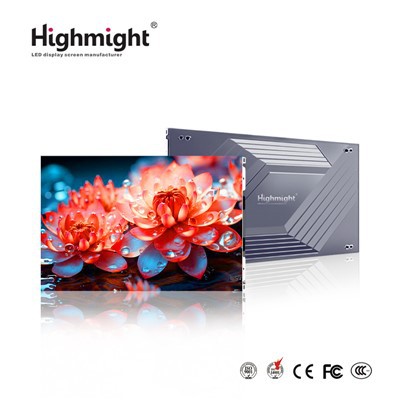
LED display module
LED display module It is one of the main components of the finished LED display!
It is mainly composed of LED lights, PCB circuit boards, driver ICs, resistors, capacitors and plastic kits!

Advantages of LED lights:
Small size,Low power consumption,Long life,High brightness, low heat,Environmentally friendly,Durable,Rich colors

Display driver IC

Red: LED lamp driver chip, generally determines the LED brightness and control method.
Green: logic control chip, used for data transmission and decoding, etc.
Blue: Line tube (MOSFET series), used to provide line scanning power, unique to the scanning screen.
LED driver chips can be divided into two types: general purpose chips and dedicated chips. The so-called general purpose chips are not designed specifically for LEDs, but are some logic chips with some logical functions of LED display screens (such as serial 2 parallel shift registers). Dedicated chips refer to driver chips designed specifically for LED display screens according to the light-emitting characteristics of LEDs. LEDs are current characteristic devices, that is, under the premise of saturated conduction, their brightness changes with the change of current, rather than by adjusting the voltage at both ends. Therefore, one of the biggest features of dedicated chips is to provide a constant current source. The constant current source can ensure the stable drive of LEDs and eliminate the flickering of LEDs, which is the premise for LED display screens to display high-quality images. Some dedicated chips also add some special functions to meet the requirements of different industries, such as LED error detection, current gain control and current correction.
High-definition high-order PWM driver chip is a high-end driver chip designed for full-color LED display screens with high refresh rate, high grayscale and high constant current accuracy. PWM is the abbreviation of Pulse Width Modulation, which means pulse width modulation, and is an analog control method. Its core is to use the digital output of the microprocessor to effectively control the analog circuit, thereby greatly improving the electrical performance of the LED display screen and bringing better display effects. The industry uses more 5125, 16380S: ICN2053, MBI5153, etc.

Module material summary

| Component name | Function Introduction | Component name | Function Introduction | |
|
PCB |
Mount IC and LED tubes to conduct current and other functions | resistance | Voltage division and current limiting | |
|
IC |
245 |
Play the role of data signal amplification and buffering | Exclusion | Several resistors are packaged together to reduce space and ensure welding quality |
| Constant current driver chip | Driver IC, 16-bit shift latch | 104P chip capacitor | High frequency filtering | |
| Constant voltage driver chip | 8-bit serial input and parallel output stable register, control column data | Electrolytic Capacitors | Filtering | |
|
138 |
8-bit decoder, output is 8 lines, control line data | Power socket | Used for unit board to access DC working voltage | |
|
123 |
Signal protection | Pin Header | Play the role of signal transmission (the same function device also has a simple horn seat) | |
|
4953 |
Acts as a switch, mainly controlling the line signal | Mask | Fixing and protecting lamps | |
| resistance | Voltage division and current limiting | Bottom shell | Fixing and waterproofing | |
Box material summary
| Component name | Function Introduction |
| Cabinet | Protective frame |
| Box switch power supply | Convert AC power into DC 5V to power the box |
| AC cable | Power supply from distribution cabinet to box |
| AC Terminal Blocks | Cabinet wiring |
| DC 5V power cable | From switching power supply to module power supply |
| Receiving Card | Equivalent to the human brain, the control system is a system that determines what content is played on the big screen. |
| Connect the cable | Play a role in signal transmission |
| Fixing screw | Fix the module to the box |
| Rubber ring | water proof |
| Box link piece | Fasten the box to the structure |

Distribution cabinet classification
| According to the use environment of the distribution cabinet | According to the power distribution cabinet | Features |
| Indoor display screen power distribution cabinet | 10KW, 20KW, 30KW, 40KW, 60KW, 80KW, etc. (High-power distribution can be customized, but considering the on-site installation, it is better to be less than 200KW) |
1. No air conditioning circuit; 2. No lightning arrester; 3. No rainproof eaves on other cabinets; 4. Relatively small power; |
| Outdoor display power distribution cabinet |
20KW, 30KW, 40KW, 60KW, 80KW, 100KW, 120KW, 150KW, etc. (High-power distribution can be customized, but considering on-site installation, it is best to be less than 200KW) |
1. There is an air conditioning circuit; 2. There is a lightning arrester; 3. The cabinet has a rainproof eaves; 4. The power is relatively large; |
Note:
1. The use environment of indoor display screens is generally air-conditioned or central air-conditioned, but indoor display screens do not need air conditioning for heat dissipation;
2. Indoor display screen power distribution cabinets are generally installed in indoor environments. Nowadays, buildings generally have lightning protection devices installed, so indoor power distribution cabinets only need to be grounded for lightning protection. Generally, there is no need to install lightning arresters, but they can be customized in special cases.
Large-area display screens use distribution boxes for partitioned power supply
When the display screen area is large and the power is high, considering that there are too many single-phase 220V power lines directly drawn from the bottom of the distribution cabinet, it is not conducive to laying and heat dissipation, so the distribution box is installed on the bracket behind the screen in different areas, and several 380V power lines (ZR-RVV-5x10) are first drawn from the main distribution cabinet to the top of each distribution box, and then the 220V power lines are drawn from the distribution box to the nearby box. In this way, the wiring is more neat and beautiful.

Note: Use a junction box in the following situations
1. The display screen is large and there are too many wires from the display screen to the power distribution screen;
2. The power distribution cabinet is installed too far from the display screen (for example, the power distribution cabinet needs to be installed in the control room of the project)
LED display professional terminology
Pixels
The smallest imaging unit of an LED display is called a pixel.
Regardless of whether it is a single primary color, a two-primary color, or a three-primary color, each imaging unit in an LED display that can be controlled individually is called a pixel.
Pixel diameter refers to the diameter of each LED light-emitting pixel, measured in millimeters.

The center distance between two pixels of an LED display is called the pixel pitch, also known as the dot pitch.
The denser the dot pitch, the higher the pixel density per unit area, the higher the resolution, and the higher the cost. The smaller the pixel diameter, the denser the dot pitch.

Resolution
The number of horizontal pixels multiplied by the number of vertical pixels on a display screen. It is an indicator of the fineness of the displayed image and refers to the number of pixels displayed on the screen.
Pixel calculation formula
Physical size/pixel spacing example: length 19.2m*width 10.8m
P10 resolution: 1920*1080

White Balance
The white balance of LED display refers to the balance when the display color is white. It is an indicator used to describe the accuracy of white after the three primary colors R, G, and B are mixed in the display. The adjustment of the brightness ratio of the three colors R, G, and B and the white coordinates is called white balance adjustment.


When the ratio of the three primary colors of red, green and blue is 3:6:1, pure white will be displayed. If the actual ratio is slightly off, there will be a deviation in white balance. Generally, attention should be paid to whether white is blue or yellowish green. Asians generally prefer blue, while Europeans and Americans generally prefer yellowish green. The quality of white balance is mainly related to the lamps used in the display.
brightness
For display screens, it is not the case that the higher the brightness is, the better. There should be a limit.
Generally, the brightness range of indoor full-color display screens is recommended to be around 600-1200cd/m2, and it is best not to exceed this range; the brightness range of outdoor LED display screens is around 4000-6000cd/m2, which should not be too bright, and now some places have already set limits on the brightness of outdoor LED display screens.
The brightness of the display screen is mainly determined by the size of the LED lamp core. Under the same product and the same current, the larger the LED lamp core, the higher the brightness.
Refresh rate
"Refresh rate" is also called "refresh frequency", which refers to the rate at which the display screen is updated, usually expressed in Hertz (Hz). Generally speaking, a refresh frequency of more than 3,000Hz is a high-performance LED display. Generally, the human eye cannot distinguish a refresh rate above 1,000Hz. The higher the refresh frequency, the more stable the image display and the less visual flicker. The low "refresh frequency" of LED displays will not only cause water ripples when recording and photographing, but also cause images similar to tens of thousands of light bulbs flashing at the same time. When watching, the human eye may feel uncomfortable or even cause damage to the eyes.

Low refresh High refresh rate
The higher the refresh rate, the smoother the video playback will be. When recording or photographing, the picture will be clearer without flickering or water wave streaks.
Our company's existing products, using high-definition high-order PWM driver chips, have a refresh rate of more than 3840Hz, using dual-latch driver chips, have a refresh rate of more than 1920Hz, and using ordinary driver chips: the full-color refresh rate is 960Hz, and the single and dual-color refresh rate is 480Hz.
Contrast
Contrast refers to the measurement of the different brightness levels between the brightest white and the darkest black in the light and dark areas of an image; in other words, the brightness ratio of the same point on the screen when it is brightest (white) to the darkest (black) under a certain ambient illumination! The higher the contrast of the LED display, the better the color reproduction of the displayed image, the clearer the image, and the brighter the colors.

Viewing Angle
When the brightness in the viewing direction drops to 1/2 of the brightness in the normal direction of the LED display, the angles between the two viewing directions and the normal on the same plane are divided into horizontal viewing angles and vertical viewing angles. The packaging method of the LED chip determines the size of the viewing angle of the LED display. Among them, the viewing angle of the surface-mounted LED lamp is better, and the horizontal viewing angle of the elliptical LED single lamp is better.

Optimal viewing distance
When a person stands in the area between S1 and S2, he can see all images without losing information. The best viewing distance is at the golden section point Sr, and the viewing distance and vision are perfectly balanced.
Formula:
Minimum viewing distance S1=3400H;
Maximum viewing distance S2=3400P;
Optimum viewing distance Sr = S1+0.618(S2 -S1);
Optimal viewing distance: It is the vertical distance relative to the screen body where the content on the display screen can be seen completely and without flattening. The position where the image content is clearest.
Minimum viewing distance: For two light spots with a certain shape, brightness, and distance, the minimum vertical distance between the two points cannot be distinguished.
Optimal viewing distance = dot pitch/(0.3-0.8), which is an approximate range. For example, for a display screen with a dot pitch of 16mm, the optimal viewing distance is 20-54 meters. If the distance is closer than the minimum distance, the pixels of the display screen can be distinguished one by one, and the granularity is relatively strong. If you stand far away, the human eye cannot distinguish the detailed features.
For outdoor LED display screens, P10 or P12 is generally used for close distances, and P16 or P20 is used for farther distances. For indoor display screens, P1.2-P2.5 is generally used, and P3-P2.5 or more is used for farther distances.

Pixel loss rate
The pixel out-of-control rate refers to the proportion of the smallest imaging unit (pixel) of the display screen that is not working properly (out of control).
There are two modes of pixel out-of-control, namely blind spot and constant bright spot.
Blind spots are often referred to as blind spots, which means that it does not light up when it is needed;
Always bright spots mean that it is always on when it is not needed.

According to the SJ/T11141-2003 industry standard, the pixel out-of-control rate of indoor screens should not be greater than 3/10,000, and the pixel out-of-control rate of outdoor screens should not be greater than 2/1000, and they should be discretely distributed.
Grayscale
"Grayscale" refers to the different color levels between the darkest and brightest colors.
Generally speaking, a high-performance LED display has grayscales above 14 bits, that is, at least 16,384 color levels.
If the grayscale level is insufficient, the color level will be insufficient or the gradient color level will not be smooth enough, and the color of the video cannot be fully displayed, which greatly reduces the LED display effect. For images displayed at high grayscale, the colors of the dark parts will still be clearly displayed, the color level of the picture is very smooth, and the overall color display effect is clearer and brighter.

The company's existing products can achieve a grayscale level of up to 14 bits using high-definition high-order PWM driver chips, a grayscale level of up to 13 bits using dual latch driver chips, and a grayscale level of generally 12 bits using ordinary driver chips.
Drive mode
LED display screens are divided into two types: constant current drive and constant voltage drive.
Constant current drive, as the name implies, means that the output current of the constant current drive is constant, while the output DC voltage will vary within a certain range with the size of the load resistance. The smaller the load resistance, the lower the output voltage, and the larger the load resistance, the higher the output voltage;
Currently, the representative drive devices are: ICN2053, ICN2038, ICN2025, SM16206, etc.;
Constant voltage drive means that the output voltage is fixed, but the output current will change with the increase or decrease of the load;
The representative drive device is 74HC595D.
Generally speaking, constant current drive products are better, but also more expensive. Because constant current drive products have more circuits and chips, the current can be kept constant, which increases the service life and stability of the LED display.
Interface Definition
HUB00: It is the arrangement order of the pins/cables between the receiving card and the module, which is a standard formed by the industry.
Example: The cable port of the series is defined as -HUB75E


Description:
N = ground (GND), LAT = latch (LAT or ST),
S = clock (Clk), O = enable (OE),
OE = enable, R = red data,
G = green data, U = blue data,
A, B, C, D, E = line signal,
H = decoded line signal,
F = floating, V = VCC
Main large-screen technology
Scanning method
There are two scanning methods for LED display screens on the market: static scanning and dynamic scanning. Generally speaking, the "point-to-point" control from the output pin of the driver IC to the pixel is called static scanning, and the "point-to-column" control is called dynamic scanning; static scanning products do not require a row control circuit; while dynamic scanning products require a row control circuit, which we can see intuitively from the driver board. Among them, static scanning products have a higher cost, but the overall display effect and product stability are better, and the brightness loss is relatively small; while dynamic scanning products require a row control circuit, although its product cost is low, but the overall display effect is worse than static, and the brightness loss will also be relatively large.

Small Pitch LED
Display principle: LED display is a pulse lighting device. Each surface-mounted LED is encapsulated with three color chips of R/G/B. Each LED represents a pixel. The control circuit of the LED display receives the video signal from the computer, drives the LED to emit light to produce the picture, and adjusts the display grayscale by controlling the duty cycle of a single LED. This makes the LED display present rich colors.


Projection Fusion
Display principle: Projection fusion technology is to overlap the edges of the images projected by a group of projectors, and use fusion technology to display a seamless, brighter, larger, and higher-resolution entire picture. The effect of the picture is like the picture projected by a single projector.

DLP, LED, LCD parameter comparison table
| Performance Indicators |
DLP |
LED |
LCD |
illustrate | |
| Physical properties | Display Mode | The light source is projected onto the screen after passing through the optical system | Digital pulse controls the brightness of SMD LEDs on LED panels to display grayscale | The electric field controls the rotation of liquid crystal molecules to allow light to pass through. Different electric field sizes form different grayscales. |
|
| Mounting unit |
50″,60″,67″,70″,80″,85″ |
1200mm*675mm(equivalent to 54″ |
46″,55″,60″ |
54-inch LED can directly replace the existing 55-inch DLP equipment without changing the front-end system layout | |
| Pixel pitch |
0.8mm~1.2mm |
1.49mm |
0.8mm~1.2mm (50″ LCD) |
|
|
| Physical quilting |
1.0mm~3.5mm |
≤0.2mm |
4.7mm |
|
|
| Optical patchwork |
≥1.0mm~3.6mm |
→0 |
≥1.0mm~4.7mm |
Within a reasonable installation space, the command seats can watch the LED display smoothly and seamlessly. | |
| Optical performance | brightness | 1. Common lumen indicators are between 300 lm and 900 lm. 2. When high lumen output is used, the image level in the bright area is lost. 3. The visual experience brought by any output lumen is approximately equivalent to 30% to 40% of the brightness of the same order of magnitude. | 0~600cd/㎡ (0~100% brightness adjustable) | 0~700cd/㎡(There should be no light source nearby, the LCD itself will reflect the ambient light |
DLP screens require lower ambient illumination to ensure image quality; there should be no light source near the screen, and the projection screen itself will reflect ambient light. The nominal brightness value of DLP usually refers to the brightness of the light source. After two refraction losses, the part that can pass through the screen is about 45% of the brightness of the light source. LED screens have no reflection phenomenon, and can ensure grayscale output while reducing brightness, which can usually be reduced to 20% for use. |
| Performance Indicators |
DLP |
LED |
LED
|
illustrate | |
| Optical properties | Brightness uniformity | Factors such as light source (bulb or high-power LED lamp) attenuation, low installation accuracy and improper adjustment may result in bright center and dark surroundings in the unit, as well as brightness differences between units. |
≥97% |
Due to the LCD light-emitting characteristics and the glass surface structure, the liquid crystal molecules at the edge are arranged unevenly, and the LCD panel will leak light, resulting in uneven brightness. |
LED display screens use point-by-point brightness and chromaticity correction to ensure uniformity of brightness and chromaticity across the entire screen. DLP uses point light source as its luminous principle, so a "sun effect" will appear in a single cabinet, affecting the consistency of the effect between cabinets. |
| Contrast | Highest typical value: 1,500:1 | Highest typical value: 5000:1 | Highest typical value: 3000:1 | The LED lamp beads used in the LED display are highly transparent and matte black colloid packaging, which effectively reduces moire and increases screen contrast while ensuring screen brightness. The polyester material used in the DLP cabinet screen is used for light transmission and displaying images, not pure black. | |
| Best viewing angle | Within the unit: 160° (horizontal/vertical); Between units: horizontal seams may affect the far-end viewing angle of the screen. | 160°/140°(horizontal/vertical) | 178°/178° (horizontal/vertical), the glass on the surface of the LCD will reflect the ambient light. When watching in a wide viewing angle area, what you see is not the content on the screen, but the reflection of the nearby light source. | The DLP unit uses point light source reflection imaging technology. When the spliced wall is viewed from a wide angle, there will be a clear decrease in column brightness and obvious ambient light reflection. The LED display is a direct light product. The far-viewing point will not be dark or have color cast, and it does not reflect ambient light. | |
| Performance Indicators |
DLP |
LED |
LCD |
illustrate | |
| Optical properties | Response time |
10ms |
80ns (calculated based on 12.5MHZ clock pulse) |
4ms |
By comparing the display principles, we can see that the LED display screen is pulse-lit, what you see is what you get, and is currently the product with the fastest grayscale response among display products. After receiving the display signal, DLP undergoes multiple refractions and the DMD reflector adjusts the angle to project the light. Therefore, the effect of LED in displaying real-time dynamic monitoring images is much higher than that of DLP. |
| Image quality | Color Temperature | Generally not adjustable or the adjustable range is small: 3200-6500 or 6500-9300 | 3200-9300 adjustable | Generally not adjustable or the adjustable range is small: 3200-6500 or 6500-9300 | Through single-point correction technology and PWM technology, LED display screens can adjust the LED color gamut range to meet the visual needs of different regions around the world, such as the NTSC standard in the United States, the PAL standard in Asia, and the CBU standard in Europe. |
| Color consistency | Calibration consistency is based on units, and the calibration method is based on the experience of the commissioning engineer, with no quantitative indicators and measurable optical standards. | Within ±0.003Cx,Cy | The consistency between LCD cabinets is difficult to adjust. The longer it is used, the more obvious the color difference between units becomes. | The LED display screen uses single-point brightness and color correction to ensure the consistency of the entire screen. | |
| Performance Indicators |
DLP |
LED |
LCD |
illustrate | |
| Image quality | Service life | 50,000 hours, the aging of DLP light source will cause uneven brightness inside the cabinet and between cabinets | 100,000 hours | After 50,000 hours, the aging of the LCD panel will cause the brightness to decrease by more than 50%. | The national standard for the service life of LED display screens is that the screen brightness is reduced to 50% of its factory brightness. During normal use, we reduce the brightness, which will greatly extend the service life of the LED display screen. |
| Color gamut | LED light source DLP screen has a wider color gamut; traditional light source DLP screen has a narrower color gamut. 70% NTSC color gamut | ≥100% NTSC color gamut | 65%-75% NTSC color gamut | LED displays can display a range of colors that traditional display products cannot, making images more vivid and lifelike with good color reproduction. In the field of video surveillance, the color gamut of LED displays makes up for the lack of resolution. | |
| Burn phenomenon | UHP mercury lamp DLP, when the high-speed running color wheel has an error, a white picture will appear to be three-color separated in the human eye, showing a rainbow effect. | none | When a still image stays on the screen for a long time, it will leave a shadow on the screen, affecting the visual effect and overall contrast. |
|
|
| Post-maintenance | Out of control point | The most prone to failure of DLP are fans, power supplies, and light sources. Failure of any of these components will cause the unit to go black. | LED lights damaged by external forces can be repaired and replaced at a single point, and the repair time for trained engineers is ≤ 2 minutes | The LCD screen has a point of failure that cannot be repaired and the entire screen needs to be replaced | The cost of LED display repair parts is negligible compared to DLP |
| Performance Indicators |
DLP |
LED |
LCD |
illustrate | |
| Installation and Running | Ambient reflections | There should be no light source within 3m~5m in front of the DLP screen. | The LED display uses low-reflection, frosted surface with high-transmittance black colloid packaging. It hardly reflects ambient light. | There should be no light source within 3m from the front of the LCD screen. When the viewing angle is large, the reflection phenomenon is serious. | The reflection of ambient light makes the wide viewing angle of DLP meaningless. When watching in the wide viewing angle area, what is presented is the reflection of the nearby light source, not the content on the screen. However, the small pitch LED display screen hardly reflects ambient light. |
| Installation space |
≥1500mm |
≤800mm |
≤780mm |
|
|
| Installation Environment | The installation environment requires a dust-free clean environment | The moisture resistance of LED itself has no special requirements on environmental cleanliness and humidity. | Special requirements for objects other than light sources | The LED light has a moisture-proof grade of 3 and can work continuously for 7*24 hours | |
| noise | Turbofans are used to dissipate heat, and professional air convection and cooling systems are added. 27DB/box | 7DB/4 cabinets |
10DB/cabinet
|
Based on noise superposition calculation, the noise of a 50 square meter LED display is equivalent to the noise of a DLP cabinet. | |

Shenzhen Highmight Technology Co., Ltd.