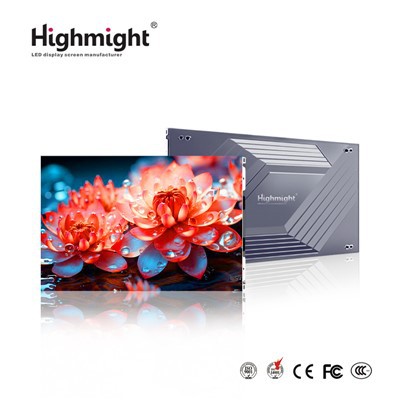



The world of indoor LED display technology is changing in amazing ways. The industry is not only booming; it is changing at an unprecedented rate as we head into 2025. The global market for these displays keeps getting bigger because of big technology advances. They are now being used in new ways in business, public, and creative settings.
This evolution has two main goals: to provide stunning visual quality and to promote sustainability and energy efficiency. Are you ready to find out what
the future of indoor displays looks like?
Learning about indoor LED display technology in 2025
In 2025, the main goal of LED display technology is to make visual experiences more immersive and useful.
There are certain important developments in the display business, such as the demand for higher pixel density, which makes images clearer and sharper even when viewed up close.
This lets you use high-brightness applications without losing any detail.
At the same time, there is a big push across the business to use less energy. Companies are coming up with new ways to use less power and decrease costs, which makes modern LED displays more accessible and long-lasting in a wider range of indoor settings.
These patterns show that the market is mature and values both performance and responsibility.

The growth of indoor LED displays
Indoor LED displays have always been changing because of new technologies. We used to have simple signage with one color, but now we have advanced video walls that can show moving content in real time.
The development of smaller, more powerful light-emitting diodes has been a big part of this progress.
Mini-LED and Micro-LED technologies are a big step forward. These new technologies make it possible to fit a huge number of individual pixels into a smaller space. This greatly increases pixel density and resolution.
The outcome is a clearer, more detailed picture that couldn't be gotten before. TrendForce's research report says that the Micro-LED market is moving quickly toward being used in high-end applications. This change isn't simply about improving visual quality. It also allows for new types of devices and uses.
Screens that are thinner, lighter, and even flexible are becoming more popular. This gives architects, event planners, and retailers that want to make really distinctive and interesting indoor places more options for how to achieve it.
Important Parts and How They Work
An indoor LED screen is a complicated system of parts that function together. The LED modules are the most important parts of the display. They have thousands of individual light-emitting diodes that are arranged into pixels.
The space between these pixels, called pixel pitch, is a very important aspect in figuring out the screen's resolution and the best distance to view it.
An LED display solution needs more than just the modules to work properly. These main parts are:
electricity Supplies: These change the AC electricity that comes from the wall into the DC voltage that the LED modules need.
Receiving and Sending Cards: This hardware takes care of the video signal and sends it to the right modules on the screen.
Control Systems: This is the software and technology you use to manage your content, change settings like brightness, and build up playlists.
Putting these parts together in the right way not only makes the image look better, but it also affects how reliable the system is over time and how much it costs to keep it running. Modern systems are made to be easier to work on, and many of them have front-access modules that make repairs easier and cut down on downtime.
Big Changes That Will Affect Indoor LED Displays in 2025
Two strong, simultaneous trends are shaping the indoor LED display market as we look ahead to 2025. First, there is a huge demand in the market for screens with a high refresh rate. This is important for broadcasting and high-end advertising because it makes fast-moving video content play back very smoothly.
The display industry is also putting more focus than ever on cutting down on energy use.
This focus comes from both environmental concerns and the necessity to cut costs for big installations.
These changes are forcing manufacturers to come up with new ideas that improve the user experience and support sustainability.

The Growth of Screens with High Refresh Rates
High refresh rate technology is no longer just for a few special displays; it is quickly becoming the norm for high-quality indoor LED displays.
The refresh rate, which is measured in Hertz (Hz), tells you how many times per second the screen's image changes. For some uses, a higher number means smoother, more fluid motion, which is very important.
This function makes the image look much better by getting rid of flicker and motion blur, which can be distracting or make your eyes tired.
A high refresh rate is a must for places where clarity is very important. Some important uses for this technology are:
Broadcast Studios: Stops scan lines from showing up when a camera films a screen.
Control Rooms: Makes sure that data and video streams are shown in real time without any lag or stuttering.
Virtual Production: Makes realistic, seamless backgrounds for movies and TV shows.
High refresh rates are becoming even more important because there is a lot of demand for big video wall installations that can handle motion perfectly.
This trend will only get stronger as content gets more dynamic and interactive, so anyone buying a new LED display should pay close attention to this feature.
Put your attention on saving energy and being green
Sustainability has become a major focus of the development of indoor LED technology.
Manufacturers are working hard to come up with solutions that put energy efficiency first. This is because of both government rules and customer demand for more environmentally friendly products.
This concentration leads to displays that use a lot less power than prior generations.
One of the most important new ideas is using better LED chips and more advanced driver ICs that use less energy. Another important thing is better heat dissipation.
Better thermal management not only means that cooling systems don't have to work as hard, but it also makes the display parts last longer, which means less electronic waste.
This effort for sustainability is good for everyone. It implies lower electricity bills and a smaller carbon imprint for your business.
For the earth, it means using less resources and having a smaller effect on the ecosystem. As we move forward, the energy efficiency rating of a device will be equally as significant as its brightness or resolution.
Improvements in the Efficiency of Displays
Indoor LEDs are reaching new limits thanks to the incessant improvement of display technology. In 2025, everyone is talking about how to make the visual experience better.
What this implies is that by combining high definition with optimum brightness levels and superb color accuracy, you may achieve picture quality that is unmatched.
These enhancements are a huge performance boost, not merely little tweaks.
The end goal is to design screens that can faithfully replicate the colors, textures, and details of the original material, making them more interesting and useful in any environment. Let's have a look at the process that lead to these improvements.

The Benefits of Fast Refresh Rates for Video Playback
Because it produces more fluid and lifelike animation, a fast refresh rate immediately leads to an improved viewing experience.
panels with higher specifications enable the human eye to comprehend fast-moving content without the distracting blur or stuttering that can be observed on panels with lower specs. Especially in dynamic ads and real-time video feeds, this is apparent.
The general picture quality is enhanced by this enhancement of motion clarity. This ensures that your message is shown in a clear and professional manner, drawing attention to it without any visual distractions, for commercial displays in heavily populated regions.
People who have to stare at the screen for long periods of time won't get eye strain because there is no flicker, which is a common problem with panels with low refresh rates.
Basically, the needs of modern high-definition content can be met by a display panel with a high refresh capability.
A fast refresh rate provides a more fluid visual experience, which is great for any kind of live event, whether it's a corporate presentation, an immersive art installation, or a sports broadcast.
Improvements in Lightness and Color Precision
Color accuracy and brightness play a significant role in achieving realistic pictures. Indoor LED screens have come a long way since 2025, offering pictures that are incredibly lifelike and colorful.
More accurate reproduction of brand colors and creative material is now possible thanks to larger color gamuts made possible by modern calibrating technologies.
A display's brightness is also important, particularly for usage in bright places like airport terminals or retail malls. But contemporary screens do more than simply show raw power; they also let you intelligently adjust the brightness. Notable improvements comprise:
Increased Dynamic Range: Makes it possible to have both darker and lighter areas in the same image.
More Nuanced Colors: Makes Gradients and Shades Look Smoother.
Comprehensive Color Accuracy: Achieved by State-of-the-Art Calibration.
When coupled with increased pixel density, these enhancements produce striking visual experiences. Modern indoor LEDs are more adaptable and powerful than ever before thanks to their capacity to generate vivid visuals that maintain color accuracy in a wide range of illumination scenarios.
New ways to save energy
The big news in the indoor LED display business is that energy efficiency has come a long way.
Cutting down on power use is no longer an afterthought; it's now a main design goal. This change is happening because people want to be more environmentally friendly and because users need to minimize their long-term operating costs.
This movement is led by new technology that saves energy and better power management systems.
These new technologies are changing the way displays work at their core, cutting down on wasted energy without hurting how well they show things. Let's have a look at the specific technologies that make this happen.

Technologies that save energy in 2025
New market trends show that there is a significant drive for indoor LED displays with new, energy-saving designs. The utilization of common cathode LED designs is one of the most popular technologies right now.
This method sends electricity to the red, green, and blue diodes independently, which cuts down on heat and power use compared to standard common anode systems.
This focus on efficiency leads to a display system that uses very little electricity. These displays consume less energy because they don't get as hot and don't need as much cooling. Better heat dissipation also makes the electronic parts last longer, which makes the investment more reliable and valuable.
These energy-saving capabilities are becoming a big selling point. As companies become more aware of the environment, it's important to choose a display solution that fits with their sustainability goals. Being able to make beautiful pictures while keeping energy costs down is a big step forward for the business.
The effects of advanced power management systems
Advanced power management systems are very important for making new indoor LED displays last longer.
These smart control systems do more than just turn things on and off. They also change how much energy they use based on real-time conditions. This sophisticated method makes sure that the display screen always works at its best.
These systems have features that help cut down on energy waste and potentially lessen maintenance costs over time. Some of the most important features are:
Dynamic Brightness Adjustment: This feature automatically reduces the brightness when there isn't much light or when it's dark outside.
Scheduled Power States: Lets you set the display to go into a low-power standby state while it's not being used.
Component-Level Monitoring: Gives information on power use, which helps find problems with hardware or inefficiencies early on.
You may get exact control over your display's energy use by using smart power management like this. Not only does this help with environmental efforts, but it also saves you money on your electricity bill. This makes modern LED technology a smarter and more responsible decision.
What are fine pitch LED displays, and why do they matter?
Fine pitch LED technology is changing the way displays work indoors. These displays have very high resolution because the space between the centers of consecutive pixels is quite short. This lets you see clear, sharp pictures even when you're only a few feet away, which was a problem with older indoor LED panels.
This ability to support greater resolutions opens up a lot of new uses that were previously only possible with LCD technology. Fine pitch LED displays are becoming more popular, which means that businesses and organizations are changing the way they communicate visually indoors. Let's look at the precise benefits and uses that are making this trend happen.

Fine pitch LEDs are good for indoor spaces because
Fine pitch LED displays' main benefit is that they can make smooth, high-resolution images that look great up close.
Because they have a lot of pixels close together, they get rid of the grid-like structure that can be seen on larger pitch panels. This makes the image smooth and perfect, like a high-definition TV.
This makes for immersive visual experiences that are great for places where people are close to the screen. It's easy to see the benefits in different indoor settings:
More Clear Details: It is quite clear when it shows complicated visuals, small text, and comprehensive video.
Video Walls That Fit Together: There are no apparent bezels or seams between the modules, so they fit together perfectly to make a single, big image.
Better Picture Quality: Compared to many other types of displays, this one has great brightness, contrast, and color reproduction.
Fine pitch LEDs improve the quality of visual communication, whether in a corporate conference room, a high-end retail store, or a broadcast studio. They give professional presentations, interesting information displays, and eye-catching ads the detail and polish they need.
Applications That Will Need Fine Pitch in 2025
Fine pitch technology is being used in a lot of tough situations since it has so many unique benefits. In places where the mission is very important, like control rooms, it is important to be able to show a lot of comprehensive data on one seamless video wall for monitoring and making decisions.
Fine pitch displays are taking the place of regular digital signs in places like airports and shopping malls. They are quite bright and clear, so you can readily see ads and information, even in bright atriums. They make the atmosphere feel current and high-tech, which makes the experience better for visitors.
Also, the rise of virtual production in the film and TV industries has led to a huge need for fine pitch LED video walls.
These displays work as realistic, moving backgrounds instead of traditional green screens. They also let actors interact with the virtual world in real time, which makes filming much more efficient.
Market Insights: LED Displays for Indoor Use in the US, Europe, and Japan
The global market for LED displays is not the same everywhere; each region has its own traits and ways of growing.
The US, European, and Japanese markets are some of the most developed. Each has its own needs and top players. To understand the world as a whole, you need to know about these regional differences.
All three areas value high-quality, cutting-edge products, but they may have different focuses, levels of competition, and rates of growth. Let's look at the forces that are making these important markets grow and the things that are making them grow.

Market dynamics and factors that help it grow in the region
The trends in the North American, European, and Japanese markets show that these are mature economies with a lot of demand for high-performance LED displays.
The size of the global market has been steadily growing, and a Frost & Sullivan report from 2023 says it will keep growing. [2] The overall trend is positive, even though the specific annual growth rate numbers change.
Different things drive market demand in these areas. There is a lot of demand in the U.S. for sports venues and big commercial displays. Europe is more interested in security and transportation applications, while Japan needs a lot of high-quality public displays and stage rentals.
These differences show that each market has its own set of priorities. Based on the market analysis that is available, the table below shows the main features.
|
Region |
|
|
Leading Companies |
||
|
North America |
Technologically advanced with strong demand |
Commercial displays, sports venues, stage rentals |
Daktronics, Planar, Samsung |
||
|
Europe |
Stable growth with a focus on quality and performance |
Commercial displays, transportation, security |
Barco, Lighthouse, Sony |
||
|
Japan |
Technologically mature with a demand for refinement |
Commercial displays, stage rentals, public displays |
Panasonic, Sony, NEC |
Main Differences Between the markets in the U.S., Europe, and Japan
The U.S., European, and Japanese display markets are all different in terms of structure and priorities, even though they are all growing and have big markets.
Local manufacturing capabilities and relationships with global suppliers affect the supply chain in each region. Many top brands, such as Samsung and Barco, have a large share of the high-end market.
The preferred application scenarios are also different. The U.S. market is the biggest for entertainment and sports in big venues, which is why there is a need for huge, high-impact displays. Japan's market, on the other hand, often puts ultra-high-resolution displays first for public information and complex commercial advertising where detail and refinement are most important.
There is a lot of demand for corporate, retail, and public sector applications in Europe, which strikes a balance.
These differences make the competitive landscape different. Some global brands are strong in all three regions, but local and regional companies often find a niche by meeting specific needs.
For instance, Daktronics is a major player in American sports venues, while European companies are often the best at making custom visualization solutions.
What to Look for in Next-Generation Indoor LEDs
Smart and connected are the future of indoor LED displays. Next-gen features are going beyond just showing things on a screen to make systems that are smarter and more responsive.
You can expect to see high-brightness displays with adaptive brightness controls that change based on the amount of light in the room. This will make sure that the display is always easy to see and uses the least amount of power.
This change is also about being able to connect. The combination of LED displays with smart building technologies will change how we manage and interact with our surroundings. This will make way for their use in smart cities. Let's take a closer look at these cutting-edge features.

Control of High-Brightness and Adaptive Brightness
LEDs that are placed indoors in areas with a lot of natural light, like atriums or installations that face windows, need to be able to be very bright. But you don't always need the brightest setting. The next generation of displays has adaptive brightness control, which is a smart feature that uses sensors to automatically change the brightness level depending on the environment.
This smart brightness control has a number of important benefits for any high-definition display solution. It makes sure that the screen is always perfectly visible without being too bright, which makes it easier to see and lessens eye strain. It's easy to see the benefits:
Best Visibility: The screen stays clear and bright no matter how bright or dark the room is.
Energy Savings: The screen only uses the power it needs for the current lighting conditions.
Longer Lifespan: Lowering brightness levels that aren't needed helps parts last longer.
This technology makes the display solution more flexible and useful. It shows a change from static hardware to a dynamic system that smartly reacts to its surroundings, which improves performance and lowers costs.
Working together with smart building technologies
The idea of a smart building includes its communication systems, and indoor LED displays are becoming a big part of that. Digital signage can now connect to other building control systems, like lighting, security, and HVAC, to make a truly connected and responsive space thanks to smart integration.
Picture this: if there is an emergency, the security system sends out an alert that automatically shows evacuation routes on all of the building's LED screens. This level of integration turns a simple display into an important part of the building's safety and operational systems. This connection is a key part of building smart cities.
This trend goes beyond just showing pre-programmed content. It lets LED displays become interactive information hubs that respond to data from different building sensors and systems in real time. This smart integration opens up new options for managing facilities, communicating with businesses, and keeping the public safe.
A Beginner's Guide to Picking an Indoor LED Display in 2025
Choosing the right indoor LED display can be hard because there are so many to choose from. This guide for beginners is here to make things easier.
It's not enough to just look at the price tag when choosing the right display solution. You also need to know exactly what you need and what key features will meet those needs.
You'll need to think about a lot of things, from the physical space to the type of content you want to show, in order to make a smart choice. If you pay attention to important specs and industry certifications, you can be sure that you are buying a display that is reliable and works well.
Necessary tools and materials needed
Buying an indoor LED display screen is only the beginning. You need to think about the tools and materials you'll need to run and maintain the project if you want it to be a success.
A full setup includes more than just the display panels. It also includes a support structure, power infrastructure, and a content management system.
Think about the whole project before you agree to do it. You will need:
Mounting Hardware: A strong frame or structure that can safely hold the weight of the display.
Control System: The hardware and software that lets you send your content to the screen.
Enough Power and Data Cabling: To make sure safety and dependability, professionals need to install the right wiring.
If you think about these resources from the beginning, you'll be able to budget correctly and avoid problems during installation. It's also smart to think about possible maintenance costs, since even the most reliable screens may need repairs during their lifetime. Planning ahead makes the process from buying to using the item every day go more smoothly.
Important Certifications and Specifications to Think About
When looking at an indoor LED display screen, certain technical details will affect how well it works.
Pixel pitch is one of the most important specs because it affects both the display's resolution and the best distance to view it from. For close-up viewing, a smaller pixel pitch is needed, but a larger pitch may be fine for screens viewed from a distance.
Brightness, refresh rate, and resolution are all equally important. Make sure that the display's native resolution is right for your content and that its brightness is right for the lighting in your room. As the demand for high-quality video grows, a high refresh rate is very important for motion that is smooth and free of flickering.
Lastly, check for important industry certifications like CE, FCC, and RoHS. These certifications show that the display screen meets international safety standards, standards for electromagnetic interference, and standards for limiting the use of dangerous materials.
They guarantee quality and compliance, which protects your investment and makes sure it works safely.
A Step-by-Step Guide: How to Choose and Configure an Indoor LED Display
Every aspect of the process of selecting and installing an indoor LED display will be covered in detail in this step-by-step tutorial.
Careful consideration is required in the choosing phase in order to guarantee that the final installation will match your expectations and will provide a significant return on investment. All of the steps, from determining your objectives to making plans for upkeep, are of the utmost importance.
You will be able to safely handle the intricacies associated with acquiring an LED display screen if you follow this systematic strategy. You will be better prepared to assess the alternatives available to you and to manage the installation process so that it concludes with a satisfactory conclusion.

Step 1: Determine the Display Requirements You Need and the Purpose of the Display
The first and most crucial stage in the process of choosing an LED display for indoor use is to clearly and precisely describe its function. What are your plans for your screen?
All of the following choices, ranging from the technical specifications to the budget, will be influenced by the purpose for which you want to utilize the product. Are you wanting to create an immersive creative experience, give precise information about your company, or display dynamic advertisements?
Take the particular circumstances in which it is used into consideration. The standards for a display in a business boardroom are significantly different than those for a show in a retail shop or a place of worship.
For a boardroom, legibility for text and images in close proximity is essential, which indicates that a fine pixel pitch is necessary. For retail purposes, great brightness and vivid colors may take precedence in order to draw in customers.
After you have a thorough knowledge of your major objectives, you will be able to begin the process of determining what you need your display to do.
Consider the sort of information you will display, the setting where the indoor LED display will be put, and the audience that you wish to attract. The entire selection process will be far more efficient as a result of this fundamental effort.
Step 2: consists of assessing the screen size, pixel pitch, and resolution.
Now that your objectives have been established, it is time to assess the fundamental technical specifications: pixel pitch, resolution, and the size of the LED screen. These three variables are closely related to one another and will be factors in determining how visually impactful your display solution will be.
The closer the audience is to the screen, the smaller (finer) the pitch should be, according to the basic rule for pixel pitch.
The intended resolution is an additional important consideration. A greater resolution will be required for you if you intend to display high-definition video or detailed graphics. This can be accomplished by increasing the size of the screen or by decreasing the distance between individual pixels. Finding the correct balance for your space and budget is of utmost importance. Take the following considerations into consideration:
5 inches Calculate the amount of area that you have available to decide on the greatest possible physical dimensions of the display.
The optimal pixel pitch is determined by the shortest distance from which people are expected to view the screen, often known as the viewing distance.
material Type: In order to display that level of detail, 4K video, which is a type of high-resolution material, requires a display capable of rendering it.
In the end, your objective is to select a combination that produces a crisp, clear image from the principal viewing angles in your room. If your audience is constantly going to be at a distance, then you should not spend a lot of money on an ultra-fine pixel pitch. However, if detail is important, you should not compromise on resolution.
Step 3: Evaluate the brightness levels and refresh rate.
The next step is to determine the refresh rate and brightness levels that are necessary for your application. When it comes to displaying any type of video material, particularly that which has fast-paced motion, the refresh rate is a critical factor to take into consideration because it is key to the smoothness of the motion. Superior image quality is the consequence of a high refresh rate (usually 1920Hz or above), which eliminates flicker and motion blur.
The level of brightness, which is measured in nits, will impact how well your display performs in its environment. In the majority of interior environments, a typical level of brightness is sufficient. In places with high ambient light, such as atriums or storefronts that are exposed to sunlight, a high-brightness model is important in order to ensure that the information stays visible and colorful.
When you are assessing these criteria, you should consider the most unfavorable circumstances possible. Will a camera be used to record a display that you are working on? In that case, a high refresh capability is absolutely necessary in order to prevent the appearance of visible scan lines. Is the screen in close proximity to a sizable window? If the answer is affirmative, then in order to counteract the glare, invest in a model with high brightness. It is critical to pay close attention to these elements in order to ensure a good installation.
Step 4: Examine the ratings for energy efficiency and consumption.
When making a purchase in 2025, energy efficiency will be a crucial consideration for customers. Power use will have a direct influence on your running expenses because an LED display is a long-term investment. Make sure to examine the energy efficiency ratings and average power usage data of each of the models while comparing them.
A display that consumes a minimal amount of power not only saves money on electricity costs but also demonstrates a dedication to environmental responsibility. Many of the displays that are available today are designed with energy efficiency in mind and make use of innovative technology to reduce waste. When you are looking for features that improve energy efficiency, you should pay attention to characteristics such as common cathode technology, which is a design that substantially decreases the amount of heat and electricity that is consumed.
Modes that conserve energy: Consumption is reduced during periods of inactivity when automatic standby or sleep modes are enabled.
Power supplies that are very efficient: Make sure that only a little amount of energy is lost throughout the process of power conversion.
Make sure that you do not forget about this step. It is possible that opting for a model with greater energy efficiency may involve a little higher initial expense, but the money that you save in the long run from reduced electricity use can provide a substantial return on your investment while also minimizing your impact on the environment.
Step 5: Examine Your Options for Installation and Maintenance Needs
Before proceeding with the purchase, it is necessary to examine the various installation choices and the long-term maintenance requirements.
What method will be used to install the LED display inside? Is it necessary to have a custom-made frame in order to install it directly on the wall, or is that not the case? Gaining an understanding of the needs for installation can assist you in making plans for the associated labor and hardware expenses.
Take into consideration how simple it is to maintain. Displays that include modules in the front that can be serviced are frequently favored because they make it possible to do repairs and replacements without the need to take the complete screen apart.
Over the lifespan of the product, this has the potential to substantially lower maintenance expenses and downtime. Inquire about the warranty, technical support, and the availability of spare parts offered by prospective providers.
In addition, the control systems that are included should be assessed. Is the program simple and easy to understand? Are the functions that you require pertaining to scheduling and administration of content supported by this? The day-to-day operation of your indoor LED display will be considerably simpler and more efficient if you choose a control system that is easy for users to navigate.
How new LED driver ICs are changing quality and efficiency
The LED driver IC (Integrated Circuit) is a very important part that has a big effect on how well a display works, yet end users often forget about it.
Recent advances in technology are changing the quality and speed of modern display screens. These little chips govern how much current goes to the LEDs, which controls their brightness and color.
Driver ICs are getting better, which is making power efficiency and image stability much better. These new ideas are what make the next generation of LED displays so beautiful and energy-efficient.

Shenzhen Highmight Technology Co., Ltd.
Professionally customized LED large screen, full indoor and outdoor coverage, free personalized design plan, click to get exclusive high-definition large screen solution to create a shocking visual experience!
Driver ICs in Modern Indoor LED Displays
The driver IC is the unsung hero of LED technology today. Its main job is to be a switchboard that carefully controls the power that goes to each LED on the display screen.
This exact control is what makes the screen able to make an image, and the quality of the driver IC has a direct effect on the quality of the finished image.
A good driver IC makes sure that the whole display has the same brightness and color. It also lets you have fast refresh rates and deep grayscale levels, which are necessary for making smooth motion and little color changes. Even the greatest LED diodes wouldn't be able to make a top-notch image without a high-tech driver IC.
Also, the design of the driver IC is an important part of how much power the display uses overall. Driver IC technology is getting better at keeping energy from being wasted. This helps keep things cool and prices down, making them an important part of both performance and sustainability.
The most recent improvements in image stability and power efficiency
The newest technical breakthrough in LED driver ICs has made power efficiency and picture stability much better. New designs may work at lower voltages and include dynamic power-saving capabilities that cut down on the screen's energy use by a huge amount, especially when it's not being used much.
These improvements also make images more stable, which makes the visual performance more dependable and constant. Some of the most important changes are:
Ghosting and Caterpillaring Cancellation: Advanced ICs have circuits that get rid of typical visual artifacts that can make images look worse.
Better Grayscale Performance: Newer ICs give you more control at low light levels, which stops color casts and makes sure visuals seem real.
Better thermal management: Efficient driver ICs create less heat, which makes the whole display module more stable and longer-lasting, lowering the costs of any repairs.
These changes that happen behind the scenes are what make today's high-performance screens better. They make sure that your screen not only looks great, but also works well and dependably for many years.
Comparing indoor LED screens and LCDs: What makes them different in 2025
For a long time, LCD technology was the only option for many indoor uses. But now, the new LED screen is a strong alternative with a number of distinct benefits.
The argument between LED and LCD is more important than ever in 2025, since LED technology has improved in certain areas and gone beyond LCDs in others.
The comparison goes beyond simply how good the picture is to include things like how long it lasts, how easy it is to maintain, and how it affects the environment as a whole. To pick the proper technology for your purposes, you need to know these distinctions.
Quality of the image, flexibility, and how long it lasts
Indoor LED screens have some clear benefits when it comes to picture quality. They can go significantly brighter than LCDs, which makes them perfect for places with a lot of light.
LEDs also usually have better contrast ratios, with darker blacks and brighter colors. This makes the image more interesting and dynamic.
LCDs can't match the versatility of LED technology. LED displays are made up of separate modules, so they may be put together in almost any size or shape, even with curves and corners.
This makes it possible to make video walls that are both innovative and seamless, without the annoying bezels (borders) that are constantly on LCD video walls. One of the main reasons the display industry is moving toward LED for large-scale installations is that it gives designers more freedom.
Lastly, LED screens usually last longer than LCD displays. An indoor LED screen that is adequately taken care of can live for 100,000 hours or more. This is frequently longer than the normal lifespan of an LCD panel's backlight. Because LED lights are so durable, they are a good choice for long-term, high-use applications.
Price, upkeep, and effect on the environment
An LED display may cost more up front than an LCD of the same size, but the total cost of ownership is frequently lower. This is because many contemporary LED versions are more energy-efficient and cost less to maintain. If one panel on an LCD display breaks, you may have to replace the whole device. But if one module or even one pixel on an LED display breaks, you may fix it by changing that module or pixel.
LED displays provide a lot of benefits when it comes to maintenance. Some of the main benefits are:
Modular Repair: You can rapidly replace out broken parts, usually from the front of the display.
No Backlight Failure: LEDs make their own light, thus there is no backlight that can burn out over time.
Longer lifespan means you don't have to replace it as often, which saves you money.
From an environmental point of view, LEDs are better for the environment since they use less energy and last longer. The modular design also implies reduced electronic waste because just the broken part has to be replaced, not the whole screen. This fits with the rising worldwide effort to cut down on e-waste.
Upcoming launches of indoor LED displays and important industry events in 2025
The easiest method to remain up to date on the latest market trends and new products is to keep an eye on future product releases and big industry events.
Integrated Systems Europe (ISE) and InfoComm are two of the best trade exhibitions for major manufacturers to show off their newest technology and products. These events give you a chance to see the future of the display industry up close.
We may expect to see a lot of new indoor LED displays in 2025 that break records for performance and efficiency.
Expected product introductions will probably focus on further smaller pixel pitches, more energy-saving features, and smarter ways to connect things.
These events provide us a look at where the market is going and show us the next generation of products that will soon be accessible for business, creative, and corporate use.
New and interesting products and features coming out this year
This year's new products are likely to show off big improvements in display technology. The trends in the industry suggest that there will be items that have both ultra-high resolution and never-before-seen energy efficiency.
One important area of technical progress will be the commercialization of Micro-LED displays for more indoor uses, not just the ultra-premium market.
Expect to see additional features that make using the system easier and more efficient. Based on what is happening in the market right now, some of the most interesting new features that will be available this year are likely to be:
Sub-1mm Pixel Pitches: This makes fine-pitch LED a good choice for even more applications that need to be seen up close.
Advanced COB & GOB Technologies: Making LED modules last longer and stay safe.
AI-Powered Image Processing: Systems that can improve the quality of pictures on their own in real time.
These new products show that the industry is dedicated to making things better all the time. You can look forward to a new generation of indoor LED displays that are more powerful and easier to get than ever before. This is because manufacturers are competing to deliver the best mix of performance, reliability, and pricing.
Shenzhen Highmight Technology Co., Ltd.
Professionally customized LED large screen, full indoor and outdoor coverage, free personalized design plan, click to get exclusive high-definition large screen solution to create a shocking visual experience!
The end
As we go toward 2025, the development of interior LED screens is changing how we use visual technology. These new technologies are not only making watching TV more enjoyable, but they are also helping the environment by focusing on high refresh rates and energy economy.
The use of sophisticated technologies like fine pitch LEDs and adaptive brightness control is a game-changer for performance and application flexibility. Knowing how the market works in different areas can help you make smart choices when you choose an indoor LED display.
As technology keeps getting better, keeping up with these trends will help you get the most out of your investment and make the most of what indoor LED displays have to offer.
Questions that are often asked
Why is a high refresh rate crucial for LED displays that are used indoors?
A fast refresh rate is important for getting rid of motion blur and flicker on a display panel, which makes the image quality smoother. This is also important for live video and broadcasting, as smooth motion is needed to keep the watching experience professional and comfortable.
What are the most important things that help indoor LED screens save energy?
Using LED chips that utilize less power, common cathode designs, and improved power management systems are the best ways to save energy. The display industry is very interested in these technologies because they work together to cut down on power use without affecting brightness or performance.
How can I pick the proper pixel pitch for my area in 2025?
Think about how far away you'll be from the LED screen when you pick the correct pixel pitch for it. A closer audience needs a finer pixel pitch to get a better resolution and a smooth image. To get the best clarity and impact, make sure the display option fits your unique needs.
Are LED screens for indoors better for the environment than LCD displays?
Yes, a lot of the time, contemporary interior LED displays are more environmentally friendly. Because they are modular, they can be repaired in specific areas without of having to replace the whole panel, which lowers long-term maintenance costs. They also last longer, use less energy, and create less electronic waste.