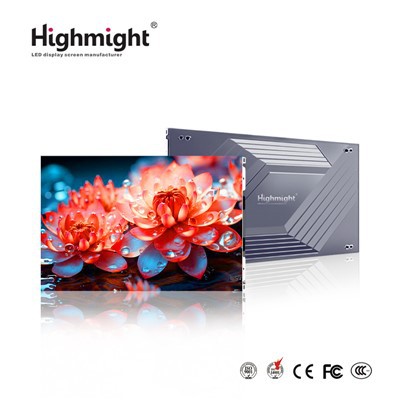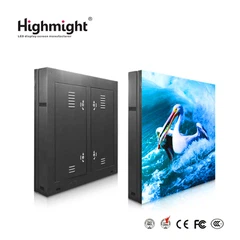

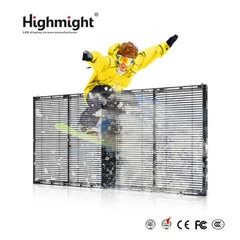


Navigating the landscape of display technology can be a bit of a maze, particularly when you're trying to decide between OLED and LED. If you're a consumer or a business owner, you're probably wondering, "Which one is superior?" The truth is, there's no definitive answer. It all hinges on what you need, including your budget, where you'll be using the screen, and what kind of performance you're after. Let's take a closer look at this to help you sort through the options and make a smart decision.
As part of Highmight, our expertise lies in the research, development, and manufacturing of LED displays. However, we're committed to providing an unbiased comparison, not just a sales pitch, but a genuine guide to help you make an informed decision.

Let's begin with the essentials. Grasping the core concepts of OLED and LED will give you a clearer picture of which technology best suits your needs. LED, or Light Emitting Diode, is a display technology that relies on LED chips to generate light.
It's typically divided into backlit LEDs (used in LCD screens) and direct-emission LED displays (such as the common outdoor advertising screens or large indoor screens). OLED, or Organic Light Emitting Diode, is a self-emissive technology where each pixel emits light independently, eliminating the need for a backlight. This means that OLED can completely shut down pixels when displaying black, achieving a truly pure black effect.
If you're considering whether to buy an OLED display or choose an LED display, think about your application scenario first. For example, if you're a movie enthusiast looking to install a high-end TV in your living room, the picture quality of OLED might amaze you. It offers infinite contrast, more vibrant colors, faster response times, and doesn't suffer from ghosting issues like some LED screens. However, if you're a business user, such as owning a retail store, and need to purchase a commercial LED display to play advertisements or showcase product information, LED's brightness and durability are often superior. LED screens perform excellently outdoors or in strong light, without easily fading or damaging, which is especially important for outdoor LED display installations.
Let's dig into the pros and cons of each, shall we? When it comes to brightness, LEDs usually have the edge. Standard LED displays can easily hit over 1000 nits, and some high-end versions go beyond 5000 nits. This means LED screens stay visible, even when the sun is blazing down, like in a mall or a stadium. A quick search for "high-brightness LED display recommendations" will show you plenty of user reviews praising LEDs for their dependability in commercial use. OLED brightness, however, typically hovers around 800-1000 nits. That's fine for indoor use, but not always the best choice for outdoor settings. If you're mostly using it for indoor entertainment, though, OLED brightness is usually more than adequate, so the display doesn't look washed out.

OLED displays shine when it comes to contrast and colour. Because each pixel emits its own light, OLED can deliver almost limitless contrast, resulting in richer blacks and more vibrant whites, with colours that closely mimic reality. For photographers and designers seeking a top-tier display, the wide colour gamut of OLED-often exceeding 95% of DCI-P3-is a major draw. Conversely, the contrast ratios of LED displays hinge on their backlighting. While Mini LED and Micro LED technologies can get clos If you're considering using displays for static content over a long period-think airport flight information boards, for instance-OLED might not be the ideal solution. LED displays, on the other hand, boast a longer lifespan, often surpassing 100,000 hours, and are remarkably resistant to burn-in. This makes them a solid choice for businesses that rely on large LED screens for the long haul. Our Highmight LED screens are put through extensive testing and maintain stable operation even in environments with high humidity or temperature; many clients have told us they still look brand new after years of use.

Energy consumption and environmental considerations are also important. OLEDs, because they emit their own light, generally consume less power overall, particularly when displaying darker images. If you're looking for "energy-saving OLED TV buying guides," OLEDs can certainly help reduce your electricity costs.
LEDs do draw more power when they're cranked up to full brightness. Fortunately, modern LED screens are equipped with smart dimming systems. These automatically tweak the brightness to match the surroundings, which helps cut down on wasted energy. When it comes to the environment, both technologies use some materials that aren't exactly green, but LEDs are generally easier to recycle. Highmight, as a manufacturer, is dedicated to using eco-friendly materials and adheres to RoHS standards. If you're in the market for an environmentally conscious LED display, take a look at what we offer.
Price is a big factor for most people. OLEDs are expensive to make, which drives up the cost.
A 55-inch OLED television can set you back several thousand yuan, whereas an LED TV of the same dimensions is typically priced at half that. If you're working with a tight budget and need an LED display, it's clearly the more economical choice. The manufacturing intricacies of OLED technology, particularly for larger screens, contribute to its higher cost, whereas LED displays can be readily adapted to create ultra-large screens. Consider the 10-meter-wide LED wall we supplied for the exhibition; it proved to be remarkably cost-effective, and our clients were quite pleased with the value.
If you're a picture quality aficionado, the superior performance of OLED is undoubtedly a worthwhile expenditure.

Now, let's consider real-world scenarios. Picture yourself a hotel owner, planning to install a display in your lobby to showcase a welcome video.
Investing in an LED display for your hotel is a smart move, given its modular construction, which simplifies upkeep and future upgrades. Should a screen section malfunction, only that specific module needs replacing. OLED, on the other hand, often necessitates a full screen replacement, a considerably pricier undertaking. However, if you're launching a premium cinema and need a "professional OLED projection screen recommendation," the captivating experience OLED delivers will undoubtedly captivate your audience.
Now, let's consider response time and refresh rate. This is especially important for gamers and sports enthusiasts. OLED displays generally boast response times under 1ms, virtually eliminating lag and providing exceptionally fluid visuals, particularly in FPS games. A quick search for "OLED monitors for gaming" will reveal a wealth of positive feedback.
LED response times are a touch slower, though top-tier LED screens, such as our 4K series, now boast 144Hz refresh rates, which should cover most bases. This is particularly important for "stadium LED screen installations," where high refresh rates keep fast action looking sharp.

Customers also think about maintenance and installation. The modular design of LED displays offers flexible installation options; you can tailor curved or oddly shaped screens to fit the area perfectly. Highmight provides a complete service, from the initial design to the final installation, making things simple. Many clients have told us that our "customised LED display service" has saved them a lot of time. OLED, while easy to install and ideal for standard sizes, can be expensive to repair if something goes wrong.
Let's look ahead. OLED is a field in constant flux; consider QD-OLED, which uses quantum dots to boost brightness and colour. But LED isn't standing still either. Micro LED is emerging as the next big thing, merging OLED's self-emissive qualities with LED's longevity. At Highmight, we're hard at work on Micro LED products, and we're aiming to bring them to market shortly. If you're curious about "emerging Micro LED displays," keep an eye on our announcements.
Ultimately, the decision between OLE It's built to last, offers vibrant visuals, and won't break the bank – a smart choice for the long haul. We've seen our LED screens shine in indoor conference rooms, where they've dramatically boosted meeting productivity. If you're after a truly premium visual experience, though, you might want to consider a "high-end OLED home theatre system."

That said, a hybrid setup can be a winning strategy. Sometimes, LED serves as the primary display, with OLED stepping in to complement it, playing to each technology's strengths. Think about exhibitions: a massive LED screen grabs attention, while a smaller OLED screen can highlight intricate product details.
At Highmight, we're not just about selling; we're about helping our clients find solutions.
Our LED display lineup spans the spectrum, from compact indoor setups to expansive outdoor installations, all with adjustable brightness and resolution options. Unsure whether to go with OLED or LED? We're here to help, offering a complimentary consultation. Our experienced team can guide you towards the best solution, tailored to your specific requirements, and help you sidestep potential pitfalls.

To sum it up: OLED offers superior picture quality and faster response times, making it ideal for premium entertainment. LED, on the other hand, shines in brightness, longevity, and cost-effectiveness, making it a solid choice for commercial and outdoor use. If you're still on the fence, think about what matters most to you-top-tier visual fidelity or dependable practicality? The right screen choice can truly elevate your life or business. Highmight is prepared to assist you in crafting the perfect display solution.
Contact Us:
Shenzhen Highmight Technology Co., Ltd.
Tel/WhatsApp/WeChat: +86 173 2442 8611 / +86 180 2765 9888
Email: sales@highmight.com