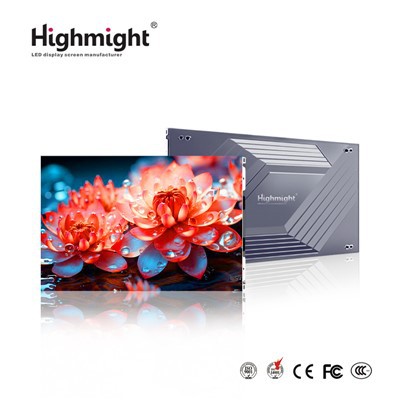

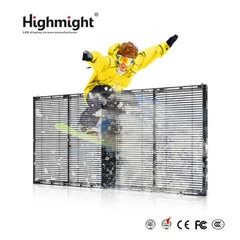


Getting to Know LED Event Screens
LED event screens are becoming a must-have for all kinds of events, from business meetings to music festivals, because they make the visual experience more lively. These bright screens turn regular events into amazing visual spectacles, yet event planners and organizers always ask the same question: "What size is an LED event screen?" The solution isn't as clear as one might assume, as LED screens exist in multiple sizes and configurations adapted to particular event requirements.
LED (Light Emitting Diode) technology has changed event displays by giving them alternatives that are brighter, more adaptable, and have higher resolution than classic projection systems. You can change the size and shape of these modular displays to meet almost any location and purpose. This makes them the best choice for events that need big, eye-catching visuals. Understanding the elements that determine LED screen size is vital for picking the best display solution for your individual event demands.

Standard Sizes of LED Screens for Events
Events with 50 to 300 people are small to medium.
LED screens are usually between these sizes for small conferences, board meetings, or private events:
3m x 2m (10' x 6.5') to 4m x 3m (13' x 10')
120 to 200 inches across the diagonal
Medium to large events with 300 to 1,000 people
For product launches, medium-sized conferences, or concert halls:
Five meters by three meters (sixteen feet by ten feet) to 8m x 4.5m (26' x 15')
Measurements across the diagonal from 200 to 400 inches
Big events with more than 1,000 people
For big conventions, concerts, or sporting events:
10m x 6m (33' x 20') up to 20m x 12m (65' x 40') or greater
Measurements across the diagonal that are more than 500 inches
Keep in mind that these are only general rules, and the best size depends on a lot of things, such as how far away you are from the screen, what you're watching, and the space you have.
Things That Affect the Size of an LED Screen
There are a few important things to think about when choosing the right size for an LED event screen:
1. How far away you are from the screen and how many others are watching
The distance between the screen and the spectator who is farthest away is the most important thing to think about. A common rule of thumb says:
Minimum screen height = distance from spectator to screen ÷ 8
The highest point on the screen is the greatest distance from the spectator divided by 3.
For instance, if the person who can see the farthest is 24 meters (80 feet) away:
Minimum height: 3 m (10')
Maximum height: 8m (26')
2. The distance between pixels and the resolution
Pixel pitch (the distance between LED centers, measured in millimeters) affects how clear an image is at different distances:
Fine pitch (1.2–2.5mm): Best for looking at things up close (less than 10m)
Medium pitch (2.5–4mm): Best for viewing from 10 to 20 meters away
Large pitch (4–10 mm): Good for seeing things from a long distance (>20 m)
To keep things clear, higher resolution needs, like intricate graphics or video, may need bigger screens with smaller pixel pitch.
3. Limitations of the venue
Physical space limits often set the maximum size of screens:
Height of the ceiling
Depth of the stage
Things that get in the way, like pillars or lighting rigs
The ability to hold weight for hanging screens
4. Type of Content
Different types of content need different amounts of space:
Support for speakers (PowerPoint, video): Medium size
Live video feeds: Bigger so people can see them
Data visualization: May need a lot of detail
Immersive experiences sometimes need wrap-around or very large formats.
5. Things to think about while making a budget
Larger panels with finer pixel pitch cost more because
Higher costs of materials
More electricity needed
More complicated to set up
More transportation needs
The modular design of LED screens
One of the best things about LED technology is that it can be made in almost any size because it is modular:
Size of the Panel
Some common sizes for LED panels are:
500mm x 500mm (19.7" x 19.7")
1000 mm x 500 mm (39.4" x 19.7")
1000mm × 1000mm (39.4" x 39.4")
These panels can be connected like building bricks to construct screens of practically any dimension or aspect ratio.
Things to think about when it comes to aspect ratio
Some common aspect ratios are:
16:9 (standard widescreen)
4:3 (old-fashioned)
21:9 (movie)
Custom ratios for special installations
You may make innovative shapes with the modularity, including curved screens, cylindrical displaysco, or even 3D shapes.
Finding the Right Size for Your Event
Follow these steps to get the best LED screen size for your event:
Find the Farthest Viewer Di
stance: Measure from the screen to the rear row.
To find the minimum height, divide the farthest distance by 8.
To find the maximum height, divide the farthest distance by 3.
Choose an aspect ratio based on the type of content you want to show.
To find the width, multiply the height by the aspect ratio (for example, height x 1.78 for 16:9).
Check Venue Compatibility: Make sure the size you calculated suits the space.
Think about pixel pitch: Pick based on how far away you will be and what you need to see.
Check the size against your budget to make sure it fits.
Different types of LED screen setups
LED technology lets you make new kinds of displays that go beyond standard flat screens:
Curved LED Screens let viewers feel more involved.
Make it easier to see from different perspectives
The usual radius of curvature is between 5m and 20m.
Cylindrical LED Displays with a 360° viewing angle
Common in stores and exhibition spaces
Diameters range from 3m to 10m.
Chandeliers with LED lights that hang
Useful and pretty
Commonly used at fancy gatherings and in ballrooms
Sizes might be very different depending on the design.
LED Screens That Are Clear
Make the display see-through
Keep natural light
Common in storefronts and when buildings are put together
Technical Considerations for Size Selection
There are a few technical things to think about when choosing the size of an LED screen:
Need for Brightness
Screens inside: 800 to 1,500 nits
Screens for outside: 5,000 to 10,000+ nits
To look the same, bigger screens may need to be brighter.
Power Usage: Usually 200–500W per square meter
Larger screens demand extensive power infrastructure
Dissipation of Heat
More heat is created by bigger screens.
Needed: good ventilation or cooling systems
Support for the structure
30 to 80 kilograms per square meter of weight
Support structures and rigging must be able to hold the overall weight.
Case Studies: How Big LED Screens Are Used in Real Life
Corporate Conference (500 attendees)
Location: Hotel ballroom
The farthest observer can see is 25m.
Screen size: 6m x 3.4m (16:9)
Distance between pixels: 2.9 mm
One center screen with side IMAG for configuration
Music Festival (20,000 attendees)
Location: Field outside
Farthest viewer: 100m
The main screen is 15m x 8.4m (16:9) and there are side displays.
6mm pixel pitch
Configuration: Several screens for different points of view
Launch of the product (1,200 people)
Place: Convention center
40m is the farthest a viewer can see.
The screen is 10m by 5.6m (16:9) with curved edges.
Pitch of the pixels: 3.9mm
Settings: Curved main screen with extra screens
What Will Happen to LED Screen Sizes in the Future
The development of LED technology is still pushing the limits of event display sizes:
Micro-LED technology lets you have finer pixel pitch in bigger sizes.
Makes it possible to have huge screens that can be seen up close
LED Displays That Can Be Bent Ultra-thin screens that can be bent
Possibility of whole walls or odd shapes
Scaling without seams
Better modular systems that make it easier to change the size
Putting together really big configurations faster
Standards for Higher Resolution
More and more big event displays are using 8K.
More demand for high pixel density at all sizes