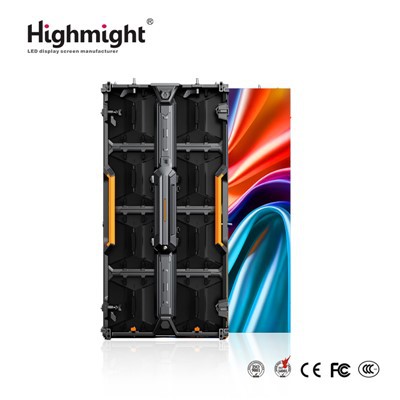



In the dynamic landscape of modern technology, indoor LED display modules have emerged as a cornerstone of visual communication, revolutionizing the way we interact with digital content in various indoor settings. As an established supplier of Indoor LED Display Module, I've witnessed firsthand the rapid evolution of these display solutions and the growing demand for enhanced functionality. One question that frequently arises from our clients is whether indoor LED display modules support touch - screen function. In this blog post, I'll delve into this topic, exploring the technical aspects, benefits, and limitations of integrating touch - screen capabilities with indoor LED display modules.
First and foremost, it's essential to understand the fundamental technology behind indoor LED display modules. These modules consist of an array of light - emitting diodes (LEDs) that are carefully arranged to form a high - resolution display. LEDs offer several advantages, including high brightness, energy efficiency, long lifespan, and excellent color reproduction, making them ideal for indoor applications such as retail stores, corporate offices, museums, and event venues.


Now, let's address the question of touch - screen functionality. The short answer is yes, indoor LED display modules can support touch - screen function. However, the implementation of touch - screen technology in LED displays is not as straightforward as it might seem. There are several factors to consider, such as the type of touch - screen technology, the display's structure, and the intended application.
There are several types of touch - screen technologies available, each with its own set of advantages and disadvantages. The most common types include resistive, capacitive, infrared (IR), and surface acoustic wave (SAW) touch - screen technologies.
Resistive touch - screen technology is one of the oldest and most widely used methods. It consists of two conductive layers separated by a small gap. When pressure is applied to the screen, the two layers come into contact, causing a change in electrical resistance that can be detected and translated into a touch event. Resistive touch - screens are relatively inexpensive and can be used with any object, including a finger, stylus, or gloved hand. However, they have lower clarity compared to other touch - screen technologies and may wear out over time due to the physical contact.
Capacitive touch - screen technology, on the other hand, is based on the electrical properties of the human body. The screen is coated with a conductive material that stores an electrical charge. When a finger touches the screen, it disrupts the electrostatic field, causing a change in capacitance that can be detected by the touch - screen controller. Capacitive touch - screens offer high clarity, fast response times, and multi - touch capabilities, making them ideal for applications that require precise and intuitive touch interactions. However, they can only be used with a bare finger or a specialized conductive stylus.
Infrared (IR) touch - screen technology uses an array of infrared LEDs and photodetectors to create an invisible grid of light beams across the screen. When an object touches the screen, it interrupts one or more of the light beams, and the touch - screen controller can determine the location of the touch based on which beams are blocked. IR touch - screens are highly durable, offer excellent optical clarity, and can support multi - touch gestures. They are also relatively easy to install and can be used with any object. However, they may be susceptible to interference from external light sources.
Surface acoustic wave (SAW) touch - screen technology uses ultrasonic waves that travel across the surface of the screen. When a finger touches the screen, it absorbs some of the ultrasonic energy, causing a change in the wave pattern that can be detected by the touch - screen controller. SAW touch - screens offer high clarity, fast response times, and excellent durability. They can also support multi - touch gestures. However, they are more expensive than other touch - screen technologies and may be damaged by scratches or contaminants on the screen surface.
When integrating touch - screen technology with indoor LED display modules, the display's structure also plays a crucial role. The touch - screen panel needs to be carefully designed and installed to ensure optimal performance and compatibility with the LED display. For example, the touch - screen panel should have a low profile to minimize the distance between the touch surface and the LED pixels, which can improve the accuracy and responsiveness of the touch interactions.
In addition, the touch - screen controller needs to be properly calibrated to work with the LED display's refresh rate and resolution. This ensures that the touch events are accurately detected and processed in real - time, without any lag or delay.
The intended application of the indoor LED display module is another important factor to consider when deciding whether to incorporate touch - screen functionality. For example, in a retail environment, a touch - screen LED display can be used to create interactive product catalogs, virtual try - on experiences, or self - service kiosks. In a corporate office, it can be used for presentations, collaborative meetings, or digital signage. In a museum or event venue, it can be used to provide interactive exhibits or information kiosks.
There are several benefits to integrating touch - screen functionality with indoor LED display modules. Firstly, it enhances the user experience by providing a more intuitive and engaging way to interact with digital content. Instead of simply viewing the display, users can actively engage with it, which can increase their level of interest and retention of information.
Secondly, touch - screen LED displays can increase the efficiency of information dissemination. For example, in a self - service kiosk, users can quickly access the information they need without the need for assistance from a staff member. This can save time and resources for businesses and organizations.
Thirdly, touch - screen LED displays can provide valuable data and insights. By analyzing the touch interactions, businesses can gain a better understanding of their customers' preferences, behaviors, and needs. This information can be used to optimize the content and layout of the display, as well as to develop targeted marketing strategies.
However, there are also some limitations to consider. One of the main limitations is the cost. Integrating touch - screen technology with LED displays can significantly increase the overall cost of the display system. This includes the cost of the touch - screen panel, the touch - screen controller, and the installation and calibration services.
Another limitation is the maintenance and durability of the touch - screen. Depending on the type of touch - screen technology used, the touch - screen panel may be susceptible to scratches, damage, or wear and tear over time. This can affect the performance and lifespan of the display system.
As a supplier of High - quality LED Module, we offer a range of indoor LED display modules that can be customized to support touch - screen functionality. Our team of experts can work with you to determine the most suitable touch - screen technology and display configuration based on your specific requirements and budget.
We also provide comprehensive installation, calibration, and maintenance services to ensure that your touch - screen LED display system operates smoothly and efficiently. Our Moisture - proof LED Module is designed to withstand harsh environmental conditions, which can further enhance the durability of your display system.
If you're interested in exploring the possibilities of integrating touch - screen functionality with indoor LED display modules for your business or organization, we'd love to hear from you. Please reach out to us to discuss your specific needs and requirements. We can provide you with detailed product information, pricing, and a customized solution that meets your expectations.
In conclusion, indoor LED display modules can support touch - screen function, offering a range of benefits for various indoor applications. However, it's important to carefully consider the type of touch - screen technology, the display's structure, and the intended application before making a decision. As a trusted supplier of indoor LED display modules, we're committed to providing high - quality products and services that meet the evolving needs of our clients.
References
- Smith, J. (2020). Touch Screen Technology: A Comprehensive Guide. Tech Publishing.
- Johnson, A. (2019). The Future of LED Displays and Touch Interactions. Display Innovations Journal.
- Brown, C. (2018). Indoor LED Display Modules: Design and Applications. Lighting and Visual Communication Magazine.