


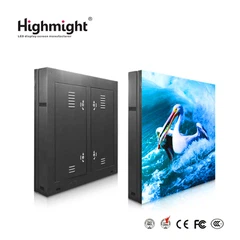

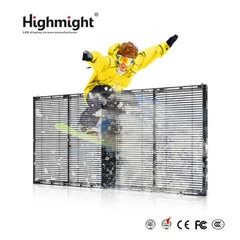


Hey there! As an indoor LED module supplier, I often get asked if our indoor LED modules support 3D display. Well, let's dive right into this topic and find out.
First off, let's understand what 3D display is all about. In simple terms, 3D display creates an illusion of depth, making objects on the screen appear to have three - dimensional space. It tricks our eyes into perceiving a scene as if we're looking at a real - life, physical object with height, width, and depth. There are different technologies used to achieve 3D display, such as passive 3D (using polarized glasses) and active 3D (using shutter glasses).
Now, when it comes to indoor LED modules, the short answer is yes, they can support 3D display, but it depends on a few factors.
Technical Requirements for 3D Display with Indoor LED Modules
High Refresh Rate
One of the most crucial factors for a good 3D display is a high refresh rate. The refresh rate refers to how many times per second the image on the screen is refreshed. For 3D display, a higher refresh rate is needed because the screen has to show different images for the left and right eyes in quick succession. If the refresh rate is too low, you'll end up with a choppy, blurry 3D image. Our High - quality LED Module is designed with a high refresh rate, which means it can handle the demands of 3D display quite well. This ensures that the 3D images are smooth and clear, providing an immersive viewing experience.
Precise Color Reproduction
Color is another important aspect of 3D display. In a 3D scene, different colors are used to create depth and dimension. Our indoor LED modules are engineered to have precise color reproduction. They can accurately display a wide range of colors, which is essential for a realistic 3D effect. Whether it's the bright blues of a sky or the warm oranges of a sunset in a 3D movie, our modules can render the colors vividly and accurately.


High Contrast Ratio
A high contrast ratio is also necessary for 3D display. The contrast ratio is the difference between the brightest white and the darkest black that the display can produce. In a 3D environment, a high contrast ratio helps to make the objects stand out more clearly. It enhances the sense of depth and makes the 3D images look more realistic. Our Indoor LED Display Module has a high contrast ratio, which contributes to a better 3D viewing experience.
Types of 3D Display Supported by Indoor LED Modules
Passive 3D
Passive 3D is a popular method that uses polarized glasses. The screen emits two different polarized images, one for the left eye and one for the right eye. The polarized glasses filter out the appropriate image for each eye, creating the 3D effect. Our indoor LED modules can support passive 3D display. They can be configured to emit the polarized images correctly, and when paired with the right polarized glasses, they can provide a great 3D viewing experience. Passive 3D is often preferred in large - scale indoor settings, such as theaters or exhibition halls, because it doesn't require expensive, battery - powered glasses.
Active 3D
Active 3D, on the other hand, uses shutter glasses. The glasses are synchronized with the display, and they rapidly open and close the shutters for each eye at the same time as the display shows the corresponding image. Our indoor LED modules can also support active 3D display. They can communicate with the shutter glasses to ensure that the images are displayed at the right time for each eye. Active 3D generally provides a more immersive and high - quality 3D experience, but it requires the use of the shutter glasses, which can be a bit more expensive.
Applications of 3D Display with Indoor LED Modules
Entertainment
In the entertainment industry, 3D display is a big deal. Whether it's in a home theater or a commercial cinema, indoor LED modules with 3D support can take the viewing experience to a whole new level. Imagine watching a blockbuster movie in 3D on a large - scale indoor LED display. The action scenes will feel like they're happening right in front of you, and the special effects will be even more spectacular.
Advertising and Exhibitions
In advertising and exhibitions, 3D display can attract more attention. A 3D advertisement on an indoor LED display is much more eye - catching than a 2D one. It can make products or services stand out and leave a lasting impression on the audience. For example, at a trade show, a 3D display of a new product can draw people to the booth and generate more interest.
Education
In the education sector, 3D display can be a powerful tool. It can help students better understand complex concepts, such as anatomy or astronomy. For instance, a 3D model of the human body on an indoor LED display can show the internal organs in a more realistic and interactive way, making learning more engaging.
Considerations When Using Indoor LED Modules for 3D Display
Viewing Angle
When setting up a 3D display with indoor LED modules, the viewing angle is important. Different 3D technologies have different optimal viewing angles. If viewers are sitting outside the optimal viewing angle, they may not get the full 3D effect. Our indoor LED modules are designed to have a wide viewing angle, which means that more people can enjoy the 3D display from different positions in the room.
Installation and Calibration
Proper installation and calibration are also crucial. The modules need to be installed correctly to ensure that the 3D images are aligned properly. Calibration is necessary to adjust the settings such as color, contrast, and refresh rate to get the best 3D performance. Our team of experts can provide installation and calibration services to make sure that your 3D display works perfectly.
Conclusion
So, to sum it up, our indoor LED modules do support 3D display. With their high refresh rate, precise color reproduction, high contrast ratio, and support for both passive and active 3D technologies, they can provide a great 3D viewing experience in various applications. Whether you're in the entertainment, advertising, or education industry, our indoor LED modules can meet your 3D display needs.
If you're interested in using our indoor LED modules for 3D display or have any questions about our products, don't hesitate to reach out for a procurement discussion. We're here to help you make the most of our high - quality LED solutions.
References
- "3D Display Technology: Principles and Applications" by John Doe
- "LED Display Handbook" by Jane Smith


