


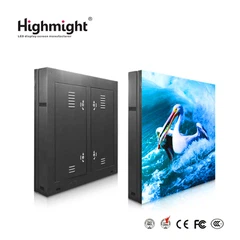

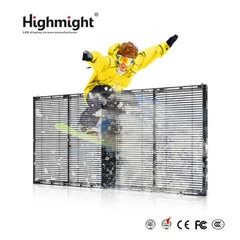


As a seasoned provider of small pitch LED displays, I understand the importance of proper settings to ensure optimal performance and visual impact. In this blog post, I'll share some valuable insights on how to adjust the settings of a small pitch LED display effectively.
Understanding the Basics of Small Pitch LED Displays
Before diving into the settings adjustment, it's crucial to have a basic understanding of small pitch LED displays. These displays are known for their high pixel density, which allows for sharp and detailed images even at close viewing distances. They are commonly used in indoor environments such as control rooms, conference rooms, and retail spaces.
Power and Initial Setup
The first step in adjusting the settings of a small pitch LED display is to ensure it is properly powered on. Connect the display to a stable power source and turn it on. Once the display is powered on, it may take a few moments for it to boot up and initialize.


Display Resolution
One of the most important settings to adjust is the display resolution. The resolution determines the number of pixels on the screen and affects the clarity and sharpness of the images. To adjust the resolution, you can usually access the display's menu settings through a remote control or a control panel.
Select the appropriate resolution based on the content you'll be displaying. For example, if you're showing high-definition videos or graphics, you'll want to choose a higher resolution such as 1920x1080 or 4K. However, if you're displaying simple text or static images, a lower resolution may be sufficient.
Brightness and Contrast
Brightness and contrast are two key settings that can significantly impact the visual quality of the display. Brightness refers to the overall level of light emitted by the display, while contrast refers to the difference between the darkest and lightest parts of the image.
To adjust the brightness, you can increase or decrease the intensity of the LEDs. A higher brightness setting is suitable for well-lit environments, while a lower brightness setting is better for dimly lit areas. Contrast can be adjusted to enhance the clarity and depth of the images. Experiment with different settings to find the optimal balance for your specific viewing environment.
Color Temperature and Gamma
Color temperature and gamma are settings that affect the color accuracy and tone of the display. Color temperature is measured in Kelvin (K) and determines the warmth or coolness of the colors. A lower color temperature (around 2700K - 3200K) produces a warm, yellowish light, while a higher color temperature (around 5000K - 6500K) produces a cool, bluish light.
Gamma, on the other hand, controls the brightness of the mid-tones in the image. Adjusting the gamma setting can help to improve the overall contrast and detail in the images. Most small pitch LED displays allow you to adjust these settings to match your preferences or the requirements of the content you're displaying.
Refresh Rate
The refresh rate refers to the number of times the display updates the image per second. A higher refresh rate results in smoother motion and reduces the risk of flickering, especially when displaying fast-moving content such as videos or animations.
For most applications, a refresh rate of 60Hz or higher is recommended. However, for professional use or applications that require extremely smooth motion, such as gaming or live events, a higher refresh rate of 120Hz or more may be necessary.
Calibration
Calibrating your small pitch LED display is an important step to ensure accurate color reproduction and consistent performance. Calibration involves adjusting the settings to match a standard color profile or reference image.
You can use a professional calibration tool or software to perform the calibration. This process may require some technical knowledge and expertise, so it's recommended to consult with a professional if you're unsure how to proceed.
Advanced Settings
In addition to the basic settings mentioned above, small pitch LED displays may also offer advanced settings such as image enhancement, aspect ratio adjustment, and pixel mapping. These settings can be used to further optimize the display's performance and customize it to your specific needs.
Image enhancement settings can be used to sharpen the edges of the images, reduce noise, and improve the overall clarity. Aspect ratio adjustment allows you to change the shape of the display to match the content you're displaying. Pixel mapping can be used to correct any color or brightness variations between individual pixels.
Troubleshooting
If you encounter any issues with the display settings, such as incorrect colors, flickering, or uneven brightness, there are a few troubleshooting steps you can take. First, check the connections to ensure they are secure and properly plugged in. You can also try resetting the display to its default settings and then readjusting them.
If the problem persists, it's recommended to contact the manufacturer's technical support team for further assistance. They can provide you with more specific troubleshooting steps or arrange for a technician to visit your site if necessary.
Conclusion
Adjusting the settings of a small pitch LED display is an important process that can significantly impact the visual quality and performance of the display. By following the tips and guidelines outlined in this blog post, you can ensure that your display is set up correctly and optimized for your specific needs.
If you're in the market for a high-quality small pitch LED display, we invite you to explore our range of Indoor LED Small Pitch Screen, Led Display Screen Indoor, and Led Display Board. Our products are designed to deliver exceptional performance and reliability, and our team of experts is always available to provide you with professional advice and support.
Contact us today to learn more about our products and services and to discuss your specific requirements. We look forward to working with you to create a stunning visual experience for your business or event.
References
- LED Display Technology: Principles and Applications. Author: [Author's Name], Publisher: [Publisher's Name], Year: [Year of Publication]
- Guide to LED Display Calibration. Author: [Author's Name], Publisher: [Publisher's Name], Year: [Year of Publication]
- Small Pitch LED Displays: A Comprehensive Overview. Author: [Author's Name], Publisher: [Publisher's Name], Year: [Year of Publication]


