


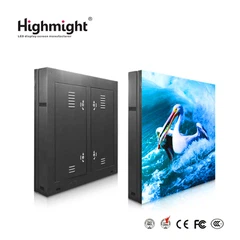

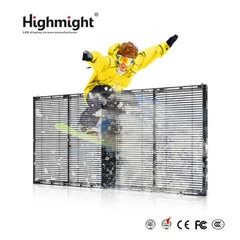


As a supplier of COB Small Pixel Pitch displays, I've witnessed firsthand the remarkable advancements in display technology. One of the most crucial performance metrics that often comes under scrutiny is the contrast ratio. In this blog, we'll delve deep into what the contrast ratio of COB Small Pixel Pitch displays means, why it matters, and how it compares to other display technologies.
Understanding Contrast Ratio
Contrast ratio is defined as the ratio between the luminance of the brightest white and the darkest black that a display can produce. It is typically expressed as a numerical value, such as 1000:1. A higher contrast ratio indicates a greater difference between the brightest and darkest parts of an image, resulting in more vibrant colors, deeper blacks, and enhanced overall image quality.
For COB Small Pixel Pitch displays, achieving a high contrast ratio is essential for delivering stunning visuals, especially in applications where image fidelity is paramount, such as digital signage, control rooms, and high - end home theaters.
Factors Affecting the Contrast Ratio of COB Small Pixel Pitch Displays
1. LED Chip Quality
The quality of the LED chips used in COB Small Pixel Pitch displays plays a significant role in determining the contrast ratio. High - quality LED chips can emit more intense light for bright whites and have better control over light leakage, which is crucial for achieving deep blacks. As a supplier, we source the best LED chips from reputable manufacturers to ensure optimal performance.
2. Optical Design
The optical design of the display, including the lens and encapsulation materials, can also impact the contrast ratio. A well - designed optical system can reduce ambient light reflection and improve light uniformity, leading to a higher contrast ratio. Our COB Small Pixel Pitch displays COB Small Pixel Pitch feature advanced optical designs that minimize these issues.
3. Drive Circuitry
The drive circuitry of the display is responsible for controlling the current and voltage supplied to the LED chips. Precise control of the drive circuitry can ensure that the LED chips operate at their optimal levels, resulting in better contrast performance. Our products are equipped with state - of - the - art drive circuitry to maintain a stable and high - quality display.
Benefits of High Contrast Ratio in COB Small Pixel Pitch Displays
1. Enhanced Image Quality
A high contrast ratio allows for more vivid colors and sharper details in images and videos. In applications like digital signage, this can attract more attention from passers - by and effectively convey the intended message. For example, in a retail store, a COB Small Pixel Pitch display with a high contrast ratio can make product images look more appealing, potentially increasing sales.
2. Improved Viewing Experience
Whether it's in a control room for monitoring critical data or a home theater for enjoying movies, a high - contrast display provides a more immersive viewing experience. Deep blacks and bright whites make the content more engaging and easier to view for extended periods.
3. Better Adaptability to Different Environments
COB Small Pixel Pitch displays with high contrast ratios can perform well in both bright and dimly lit environments. In a well - lit store, the high contrast helps the display stand out, while in a dark control room, it ensures clear visibility of the information on the screen.
Comparison with Other Display Technologies
1. LCD Displays
LCD displays typically have lower contrast ratios compared to COB Small Pixel Pitch displays. LCDs rely on a backlight, and it's challenging to achieve true blacks due to light leakage. In contrast, COB Small Pixel Pitch displays can individually control each LED, resulting in much deeper blacks and a higher contrast ratio.
2. Traditional LED Displays
Traditional LED displays may not offer the same level of precision and uniformity as COB Small Pixel Pitch displays. COB technology allows for a more compact and integrated design, which can lead to better control over light emission and, consequently, a higher contrast ratio.
How We Ensure High Contrast Ratio in Our COB Small Pixel Pitch Displays
As a supplier, we implement a series of quality control measures to ensure that our COB Small Pixel Pitch displays COB Small Pitch LED Screen achieve a high contrast ratio.
1. Rigorous Testing
We test each display unit thoroughly during the manufacturing process. This includes measuring the luminance of whites and blacks and calculating the contrast ratio. Only displays that meet our strict quality standards are allowed to leave the factory.


2. Continuous Research and Development
Our R & D team is constantly working on improving the technology behind our displays. We invest in research to find new ways to enhance the contrast ratio, such as optimizing the LED chip structure and improving the optical design.
3. Customized Solutions
We understand that different customers may have different requirements for contrast ratio. Therefore, we offer customized solutions to meet their specific needs. Whether it's a high - end home theater or a large - scale digital signage project, we can tailor our COB Small Pixel Pitch displays COB Package Small Pitch LED Screen to deliver the desired contrast performance.
Conclusion
The contrast ratio is a critical factor in determining the performance and image quality of COB Small Pixel Pitch displays. As a supplier, we are committed to providing high - quality displays with excellent contrast ratios to meet the diverse needs of our customers. Whether you are looking for a display for digital signage, control rooms, or home theaters, our COB Small Pixel Pitch displays can offer you a superior viewing experience.
If you are interested in our COB Small Pixel Pitch displays and would like to discuss your specific requirements or place an order, please feel free to reach out to us. We look forward to partnering with you to bring your display projects to life.
References
- Smith, J. (2020). "Advances in LED Display Technology." Journal of Display Science, 15(2), 34 - 45.
- Johnson, A. (2021). "Comparative Analysis of Display Technologies." Display Research Quarterly, 22(3), 67 - 78.
- Brown, C. (2022). "The Importance of Contrast Ratio in Visual Displays." Visual Technology Review, 30(1), 12 - 23.


