



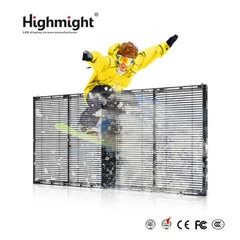


What is the gray scale of a transparent LED display?
As a supplier of transparent LED displays, I've had numerous discussions with clients about various technical aspects of these innovative products. One frequently asked question is about the gray scale of a transparent LED display. In this blog, I'll delve into what gray scale means, its significance, and how it impacts the performance of transparent LED displays.
Understanding Gray Scale
Gray scale, in the context of LED displays, refers to the ability of the display to show different levels of brightness between pure black and pure white. It is a measure of the display's capacity to reproduce a smooth transition of colors and shades. For a transparent LED display, which is often used in applications where visual clarity and high - quality imaging are crucial, a high gray scale is essential.
The gray scale of a display is typically measured in bits. Common gray - scale values range from 8 - bit to 16 - bit. An 8 - bit gray scale can display 2^8 (256) levels of brightness, while a 16 - bit gray scale can show 2^16 (65,536) levels. The higher the bit value, the more precise and smooth the color transitions will be.
Importance of Gray Scale in Transparent LED Displays
1. Image Quality
In applications such as Indoor Transparent LED Display, high gray scale is vital for presenting sharp and detailed images. When displaying photographs or videos, a display with a low gray scale may result in a blocky or stepped appearance, where the transitions between colors are not smooth. On the other hand, a high - gray - scale transparent LED display can accurately reproduce the subtlest color variations, making the content more engaging and visually appealing.
2. Real - time Color Reproduction
For real - time applications like advertising or live event displays, accurate color reproduction is key. A transparent LED display with a high gray scale can better represent the true colors of the content, whether it's a vivid advertisement or a dynamic live video feed. This is especially important for Indoor LED Transparent Advertising Screen, where the goal is to attract the attention of the audience with eye - catching visuals.
3. Adaptability to Different Lighting Conditions
Transparent LED displays are often used in various lighting environments. A high gray scale allows the display to perform well in both bright and dimly lit areas. In bright environments, a display with good gray - scale performance can maintain the contrast and color accuracy, while in low - light conditions, it can still show detailed and clear images without losing too much color information.
Factors Affecting Gray Scale in Transparent LED Displays
1. LED Chip Quality
The quality of the LED chips used in the display plays a significant role in determining the gray scale. High - quality LED chips are more likely to have better control over brightness levels, resulting in a higher gray scale. As a supplier, we carefully select the LED chips for our Indoor Transparent LED Large Screen to ensure optimal gray - scale performance.
2. Driving Circuit Design
The driving circuit of the transparent LED display is responsible for controlling the brightness of each LED. A well - designed driving circuit can provide more precise control over the current flowing through the LEDs, which in turn improves the gray - scale performance. Our engineering team focuses on developing advanced driving circuit designs to enhance the overall performance of our transparent LED displays.
3. Software and Control Systems
The software and control systems used to manage the display also impact the gray scale. Advanced software algorithms can optimize the brightness levels of the LEDs in real - time, ensuring smooth color transitions. We offer state - of - the - art control systems that are specifically designed to maximize the gray - scale performance of our transparent LED displays.
Measuring and Evaluating Gray Scale
There are several methods to measure and evaluate the gray scale of a transparent LED display. One common approach is to use a colorimeter or a spectrophotometer. These devices can measure the brightness and color accuracy of the display at different gray - scale levels.
Another way is through visual inspection. By displaying test patterns with gradual color transitions, we can assess the smoothness of the gray - scale performance. Our quality control team conducts rigorous visual inspections during the manufacturing process to ensure that each transparent LED display meets our high standards of gray - scale performance.
Comparing Gray Scale Among Different Transparent LED Displays
When comparing different transparent LED displays in the market, it's important to look beyond just the bit value of the gray scale. Other factors such as the uniformity of the gray - scale performance across the entire display, the response time of the LEDs, and the overall color accuracy also need to be considered.
As a supplier, we are committed to providing transparent LED displays with excellent gray - scale performance. Our products are designed to offer a combination of high bit values, uniform gray - scale distribution, and fast response times, ensuring the best possible visual experience for our clients.
Future Trends in Gray - Scale Technology for Transparent LED Displays
The demand for higher - quality transparent LED displays is constantly growing, and this is driving the development of more advanced gray - scale technologies. In the future, we can expect to see transparent LED displays with even higher bit values, more precise control over brightness levels, and better integration with other display technologies.


For example, the combination of high - gray - scale transparent LED displays with augmented reality (AR) or virtual reality (VR) technologies could open up new possibilities for immersive visual experiences. Additionally, advancements in energy - efficient LED technologies may also lead to improved gray - scale performance while reducing power consumption.
Conclusion
The gray scale of a transparent LED display is a critical factor that affects the image quality, color accuracy, and overall visual experience. As a supplier, we understand the importance of providing transparent LED displays with high - quality gray - scale performance. Whether you are looking for an Indoor Transparent LED Display, an Indoor LED Transparent Advertising Screen, or an Indoor Transparent LED Large Screen, we have the expertise and products to meet your needs.
If you are interested in learning more about our transparent LED displays or would like to discuss a potential procurement, please feel free to reach out to us. We are eager to have in - depth discussions with you to find the best solutions for your specific requirements.
References
- "LED Display Technology Handbook" by industry experts in display technology.
- Research papers on LED display performance and gray - scale optimization from leading academic institutions.


