





Pixel pitch is a fundamental concept when it comes to understanding the performance and suitability of transparent LED displays. As a transparent LED display supplier, I've witnessed firsthand how crucial it is for customers to grasp this concept to make informed decisions. In this blog, I'll delve into what pixel pitch is, its significance in transparent LED displays, and how it impacts your viewing experience.
What is Pixel Pitch?
Pixel pitch refers to the distance, measured in millimeters, between the centers of two adjacent pixels on an LED display. In simpler terms, it's the space between the tiny light - emitting elements that make up the display. For example, a display with a pixel pitch of 3mm means that the center of one pixel is 3mm away from the center of the next pixel.
The pixel pitch of a transparent LED display plays a pivotal role in determining its visual quality. A smaller pixel pitch indicates that the pixels are closer together. This results in a higher pixel density, which generally means a sharper and more detailed image. Conversely, a larger pixel pitch means that the pixels are more spread out, leading to a lower pixel density and potentially a less detailed image.
Significance of Pixel Pitch in Transparent LED Displays
Image Clarity and Detail
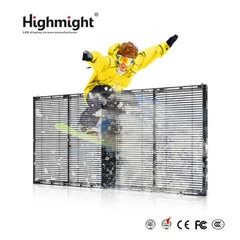
When it comes to transparent LED displays, the pixel pitch directly affects the clarity of the content being displayed. For applications where high - definition images and videos are required, such as Transparent LED Advertising Screen, a smaller pixel pitch is essential. Smaller pixel pitches can reproduce fine details, sharp edges, and smooth gradients, making the content more engaging and professional - looking.
For instance, in a retail store using a transparent LED display for product promotion, a display with a small pixel pitch can showcase product features in high resolution. Customers can clearly see the texture of the products, the colors, and any intricate details, which can significantly enhance the effectiveness of the advertising.
Viewing Distance
Another crucial factor related to pixel pitch is the optimal viewing distance. The pixel pitch determines how far away a viewer should stand to get the best viewing experience. A display with a small pixel pitch can be viewed up close without the individual pixels being visible. This is ideal for Indoor Transparent LED Display installations where viewers are likely to be in close proximity, such as in shopping malls, museums, or corporate lobbies.
On the other hand, a display with a larger pixel pitch is better suited for long - distance viewing. For example, in outdoor advertising applications or large - scale installations, a larger pixel pitch can still provide a clear image when viewed from a distance. However, if viewed too closely, the individual pixels may become visible, which can be distracting.
Cost
Pixel pitch also has a significant impact on the cost of the transparent LED display. Generally, displays with smaller pixel pitches are more expensive. This is because manufacturing smaller pixels requires more advanced technology and precision, which increases the production cost. As a supplier, I often work with customers to find the right balance between pixel pitch, performance, and budget. For some applications, a slightly larger pixel pitch may be acceptable if the viewing distance allows it, which can result in cost savings without sacrificing too much on visual quality.
How to Choose the Right Pixel Pitch for Your Transparent LED Display
Consider the Application
The first step in choosing the right pixel pitch is to consider the intended application of the transparent LED display. If it's for high - end advertising in a busy city center, a smaller pixel pitch will be necessary to attract attention and deliver a high - quality visual experience. On the other hand, if the display is used for a large - scale architectural installation where viewers will be at a distance, a larger pixel pitch may be sufficient.


Evaluate the Viewing Distance
As mentioned earlier, the viewing distance is a key factor. Measure the average distance from which the viewers will be looking at the display. If it's an indoor display in a small room, a pixel pitch of 2 - 4mm may be appropriate. For outdoor displays or large - scale indoor spaces, a pixel pitch of 6mm or more could be considered.
Budget Constraints
Your budget will also play a role in the decision - making process. While smaller pixel pitches offer better image quality, they come at a higher cost. It's important to weigh the benefits of a smaller pixel pitch against your budget. Sometimes, a slightly larger pixel pitch that still meets the minimum requirements for your application can save you a significant amount of money.
Impact of Pixel Pitch on Different Types of Transparent LED Displays
High Brightness Transparent LED Display
High - brightness transparent LED displays are often used in outdoor environments or well - lit indoor spaces. The pixel pitch in these displays needs to be carefully chosen to ensure that the high brightness doesn't affect the image quality. A smaller pixel pitch can help maintain the clarity and detail of the content even in bright conditions.
Transparent LED Video Walls
Transparent LED video walls are made up of multiple display panels. The pixel pitch across the entire wall needs to be consistent to ensure a seamless viewing experience. When designing a video wall, it's important to select the appropriate pixel pitch based on the size of the wall and the viewing distance.
Conclusion
In conclusion, understanding the pixel pitch of a transparent LED display is essential for anyone looking to purchase one. It affects the image clarity, viewing distance, and cost of the display. As a transparent LED display supplier, I'm committed to helping my customers make the right choice based on their specific needs.
Whether you're looking for a Transparent LED Advertising Screen, an Indoor Transparent LED Display, or a High Brightness Transparent LED Display, I can provide you with professional advice and high - quality products. If you're interested in learning more or discussing your requirements, please feel free to reach out. I'm here to assist you in finding the perfect transparent LED display solution for your project.
References
- LED Display Technology Handbook. Publisher: [Publisher Name], Year: [Year of Publication]
- Journal of Display Technology, Volume [Volume Number], Issue [Issue Number]. Title: "Analysis of Pixel Pitch in Transparent LED Displays"


