





Hey there! As a supplier of LED crystal film screens, I often get asked about the power consumption of these nifty displays. So, I thought I'd dive into this topic and share some insights with you all.
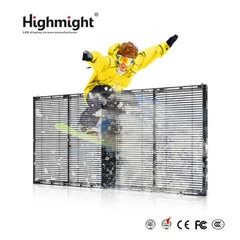
First off, let's understand what an LED crystal film screen is. It's a super - cool, high - tech display solution. You can check out more about the LED Transparent Crystal Film Screen. These screens are transparent, lightweight, and can be easily installed on various surfaces like glass windows. They're great for advertising, exhibitions, and adding a modern touch to any space.
Now, onto the main question: what's the power consumption of an LED crystal film screen? Well, it depends on several factors. One of the biggest factors is the size of the screen. Just like with regular TVs or monitors, the larger the screen, the more power it's likely to consume. A small LED crystal film screen, say one that's around 2 square meters, might use relatively less power compared to a huge 10 - square - meter screen.
Another important factor is the brightness level. If you set your screen to a super - bright setting, it'll gobble up more electricity. This is because more LEDs need to be powered to produce that high level of brightness. On the other hand, if you're okay with a lower brightness, especially in a dimly lit environment, the power consumption will go down.
The pixel density also plays a role. A screen with a higher pixel density has more LEDs packed into a given area. This means that there are more individual light - emitting elements that need to be powered, resulting in higher power consumption. But a higher pixel density also gives you a sharper and more detailed image, so it's a bit of a trade - off.
Let's talk numbers. On average, a typical LED crystal film screen might consume around 150 - 300 watts per square meter. But this is just a ballpark figure. For example, if you have a 5 - square - meter screen, at 200 watts per square meter, it would use about 1000 watts (or 1 kilowatt) when it's running at a normal brightness level.
Now, compared to other types of display technologies, LED crystal film screens are actually quite energy - efficient. Traditional LCD or plasma screens often consume a lot more power. LEDs are known for their energy - saving properties because they convert a higher percentage of electrical energy into light, rather than wasting it as heat like some other technologies.
One of the great things about LED crystal film screens is that they can be programmed to adjust their brightness based on the ambient light. For instance, during the day when there's a lot of natural light, the screen can automatically increase its brightness to make the content visible. And at night, when there's less light around, it can dim down, which not only saves power but also makes the display look more comfortable to view.
Let's say you're running a storefront with an LED crystal film screen on the window. During the day, when the sun is shining bright, the screen might be set to a high - brightness mode to attract the attention of passers - by. But as the sun sets and the ambient light decreases, the screen can gradually lower its brightness. This kind of intelligent adjustment can significantly reduce the overall power consumption over the course of a day.
Another aspect to consider is the duty cycle. If your screen is on 24/7, obviously it'll consume more power than if it's only on for a few hours a day. You can program the screen to turn on and off at specific times, which is a simple yet effective way to save energy.
When it comes to power management, most modern LED crystal film screens come with built - in power - saving features. These can include things like automatic standby mode when there's no input signal, or the ability to adjust the refresh rate. A lower refresh rate can reduce power consumption, although it might also affect the smoothness of moving images a bit.
If you're worried about the long - term cost of running an LED crystal film screen, it's important to factor in the energy savings. Over time, the lower power consumption can add up to significant cost savings. Plus, with the increasing focus on environmental sustainability, using an energy - efficient display like an LED crystal film screen is a great way to do your part.


So, if you're in the market for an LED crystal film screen, don't just think about the initial purchase price. Consider the long - term power consumption and the potential savings. And if you have any questions about the power consumption of a specific screen size or model, feel free to reach out to us. We're here to help you make an informed decision.
Whether you're a business owner looking to spruce up your storefront, an event organizer wanting to add a high - tech touch to an exhibition, or just someone who loves cool technology, an LED crystal film screen could be a great choice. And with its relatively low power consumption, it's both cost - effective and environmentally friendly.
If you're interested in purchasing an LED crystal film screen or want to learn more about our products, we'd love to hear from you. We can provide you with detailed information about power consumption for different models, as well as help you choose the right screen for your specific needs. Just drop us a line, and we'll start the conversation.
In conclusion, the power consumption of an LED crystal film screen is influenced by multiple factors such as size, brightness, pixel density, and duty cycle. But overall, it's an energy - efficient display solution that offers great visual appeal and long - term cost savings. So, why not consider adding one to your space?
References:
- General knowledge about LED technology and display power consumption
- Industry reports on energy - efficient display solutions


