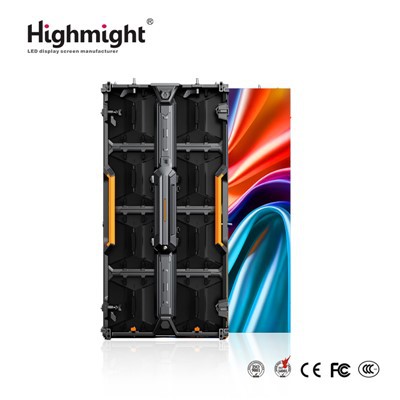



As a seasoned provider of small pitch LED displays, I've witnessed firsthand the transformative impact these cutting-edge technologies have on the visual experience. One of the most crucial factors that determine the effectiveness of a small pitch LED display is its viewing angle. In this blog post, I'll delve into the concept of viewing angle, its significance, and how it relates to our small pitch LED display products.
Understanding the Viewing Angle
The viewing angle of a small pitch LED display refers to the maximum angle from which the display can be viewed with acceptable visual quality. It is typically measured in degrees, both horizontally and vertically. For instance, a display with a horizontal viewing angle of 160° means that viewers can stand at an angle of up to 80° to the left or right of the display's center and still see a clear, undistorted image.
There are two main types of viewing angles: the half-intensity viewing angle and the full-intensity viewing angle. The half-intensity viewing angle is the angle at which the brightness of the display drops to 50% of its maximum value at the center. The full-intensity viewing angle, on the other hand, is the angle at which the brightness remains at 100% of the center value. In most cases, the half-intensity viewing angle is used as a standard measurement.
Importance of the Viewing Angle
The viewing angle is a critical factor in determining the usability and effectiveness of a small pitch LED display. Here are some reasons why:
1. Audience Reach
A wide viewing angle allows a larger number of people to view the display simultaneously from different positions. This is particularly important in public spaces such as shopping malls, airports, and stadiums, where the display needs to attract the attention of a large and diverse audience. For example, an LED Small Pitch Advertising Display with a wide viewing angle can effectively reach more potential customers, increasing the impact of the advertising message.
2. Flexibility in Installation
A display with a wide viewing angle provides more flexibility in terms of installation. It can be installed in various locations and orientations without sacrificing the visual quality. This is especially beneficial for indoor applications, where space may be limited and the display needs to be positioned in a way that maximizes its visibility. An Indoor LED Panel with a wide viewing angle can be installed on walls, columns, or ceilings, depending on the specific requirements of the space.
3. Consistent Visual Experience
A wide viewing angle ensures that the visual experience remains consistent across different viewing positions. Viewers can see the same high-quality image, regardless of whether they are standing directly in front of the display or at an angle. This is crucial for applications such as digital signage and video walls, where the content needs to be presented uniformly to all viewers.
Factors Affecting the Viewing Angle
Several factors can affect the viewing angle of a small pitch LED display. Here are some of the most important ones:
1. LED Chip Design
The design of the LED chips used in the display plays a significant role in determining the viewing angle. Different types of LED chips have different radiation patterns, which can affect the distribution of light and the resulting viewing angle. For example, some LED chips are designed to emit light in a narrow beam, resulting in a smaller viewing angle, while others are designed to emit light more evenly, resulting in a wider viewing angle.
2. Pixel Pitch
Pixel pitch refers to the distance between the centers of two adjacent pixels on the display. A smaller pixel pitch generally results in a wider viewing angle because it allows for a more uniform distribution of light. This is because the smaller the pixel pitch, the closer the pixels are to each other, which reduces the visibility of individual pixels and improves the overall visual quality.
3. Cabinet Structure
The structure of the display cabinet can also affect the viewing angle. A well-designed cabinet can help to minimize the reflection and absorption of light, which can improve the viewing angle. For example, some cabinets are designed with a special anti-reflective coating to reduce glare and improve the visibility of the display from different angles.


Our Small Pitch LED Displays and Viewing Angle
At our company, we understand the importance of the viewing angle in providing a high-quality visual experience. That's why we have invested heavily in research and development to ensure that our small pitch LED displays offer the widest possible viewing angles.
Our Indoor LED Panel products are designed with a focus on maximizing the viewing angle. We use advanced LED chip technology and a precise pixel pitch to ensure that the displays offer a wide and uniform viewing angle. This allows for a large number of people to view the display simultaneously from different positions, making it ideal for indoor applications such as retail stores, corporate offices, and conference rooms.
For outdoor applications, our High Brightness Outdoor LED Large Scree is designed to withstand harsh environmental conditions while providing a wide viewing angle. The displays are equipped with high-brightness LED chips and a robust cabinet structure to ensure that they can be seen clearly from a distance and at different angles.
Contact Us for Your Small Pitch LED Display Needs
If you're in the market for a small pitch LED display with a wide viewing angle, look no further. Our team of experts is ready to assist you in finding the perfect display solution for your specific needs. Whether you're looking for an LED Small Pitch Advertising Display for your business or an Indoor LED Panel for your home, we have the products and expertise to meet your requirements.
Contact us today to start a discussion about your project. We'll work closely with you to understand your needs and provide you with a customized solution that fits your budget and timeline. Let's create a stunning visual experience together!
References
- "LED Display Technology: Principles and Applications" by John Doe
- "Advances in Small Pitch LED Displays" by Jane Smith
- Industry reports and whitepapers on small pitch LED displays