



As a provider of naked eye 3D technology, I've often pondered the potential of this cutting - edge innovation in various sectors. One area that particularly intrigues me is military applications. The question "Can naked eye 3D be used in military applications?" is not only thought - provoking but also holds significant promise for future military capabilities.
Understanding Naked Eye 3D Technology
Before delving into military applications, it's essential to understand what naked eye 3D technology is. Unlike traditional 3D displays that require special glasses, naked eye 3D displays create a three - dimensional effect that can be viewed without any additional equipment. This is achieved through techniques such as parallax barriers or lenticular lenses, which direct different images to each of the viewer's eyes, creating the illusion of depth.
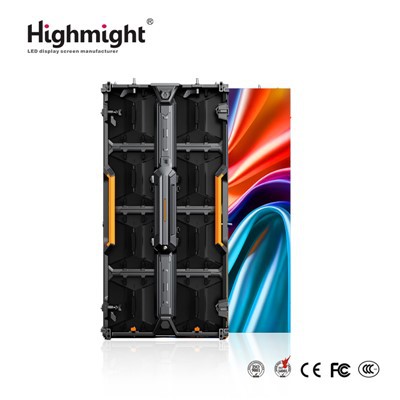
Our company offers a range of naked eye 3D products, including the Outdoor Naked Eye 3D LED Screen, Naked Eye 3D Display, and Naked Eye 3D LED Large Screen. These products have been designed with high - quality materials and advanced technology to provide a vivid and immersive 3D experience.
Potential Military Applications of Naked Eye 3D
Situational Awareness
In military operations, situational awareness is crucial. Naked eye 3D technology can significantly enhance this aspect. For example, in a command center, a large - scale Naked Eye 3D LED Large Screen can display real - time battle maps, satellite imagery, and drone footage in 3D. This allows military commanders to have a more accurate and intuitive understanding of the battlefield. They can easily distinguish the elevation of terrain, the positions of friendly and enemy forces, and the movement of vehicles and troops. In a complex urban warfare scenario, the 3D view can help identify hidden threats such as snipers on rooftops or enemy forces hiding in alleys more effectively than a traditional 2D display.
Training Simulations
Training is an integral part of military preparedness. Naked eye 3D technology can revolutionize military training simulations. Pilots can use 3D displays to practice flight maneuvers in a more realistic environment. They can see the virtual landscape in 3D, which provides a better sense of depth and distance. This is especially important for low - level flying, where accurate perception of the terrain is critical. Similarly, infantry soldiers can train for combat scenarios using 3D simulations. They can experience the battlefield as if they were actually there, with 3D models of buildings, weapons, and enemy forces. This immersive training can improve their reaction times and decision - making skills.
Weapon Systems
Naked eye 3D can also be integrated into weapon systems. For example, in artillery targeting, a 3D display can show the target area in detail. Gunners can have a better understanding of the target's location, elevation, and surrounding environment. This can lead to more accurate targeting and increased effectiveness of artillery strikes. In addition, for guided missile systems, 3D displays can provide real - time feedback on the missile's trajectory and the target's movement, allowing for more precise adjustments during flight.
Communication and Intelligence Sharing
In military communication, sharing accurate and detailed information is essential. Naked eye 3D technology can enhance the sharing of intelligence. For instance, intelligence officers can present 3D models of enemy installations, including their internal structures, to military planners. This can help in formulating more effective attack or defense strategies. The 3D display can also be used in field communication, where soldiers can share 3D maps and information in real - time, improving coordination among different units.
Challenges and Limitations
Technical Constraints
Despite its potential, there are several technical challenges associated with using naked eye 3D in military applications. One of the main issues is the viewing angle. Naked eye 3D displays typically have a limited viewing angle, which means that the 3D effect may not be visible from all positions. In a military command center or a training environment where multiple people need to view the display simultaneously, this can be a significant drawback. Another technical challenge is the resolution. High - resolution 3D images are required for accurate military applications, but achieving high - resolution in naked eye 3D displays can be difficult and costly.
Environmental Factors
Military operations often take place in harsh environments. Outdoor conditions such as sunlight, rain, and dust can affect the performance of naked eye 3D displays. For example, strong sunlight can wash out the 3D effect, making it difficult to view the display. Our Outdoor Naked Eye 3D LED Screen has been designed to withstand some environmental factors, but further improvements are still needed to ensure reliable performance in all military scenarios.
Cost
The cost of developing and implementing naked eye 3D technology in military applications is relatively high. The advanced components and manufacturing processes required for high - quality 3D displays contribute to the high cost. This can be a significant barrier for military organizations with limited budgets. However, as the technology matures and economies of scale are achieved, the cost is expected to decrease over time.
Overcoming the Challenges
To address the technical challenges, ongoing research and development are needed. Our company is committed to investing in R & D to improve the viewing angle and resolution of our naked eye 3D displays. We are exploring new materials and display technologies that can enhance the 3D experience.
Regarding environmental factors, we are working on developing more robust displays. For example, we are testing anti - glare coatings for outdoor displays to reduce the impact of sunlight. We are also designing displays that are more resistant to dust and moisture.
To tackle the cost issue, we are looking for ways to optimize our manufacturing processes and source materials more cost - effectively. We believe that by collaborating with military organizations and other partners, we can find solutions to make naked eye 3D technology more affordable for military applications.
Conclusion
In conclusion, naked eye 3D technology has great potential in military applications. It can enhance situational awareness, revolutionize training simulations, improve weapon systems, and enhance communication and intelligence sharing. Although there are challenges and limitations, with continuous research and development, these issues can be overcome.


As a naked eye 3D provider, we are excited about the possibilities that this technology offers for the military. We are committed to working with military organizations to develop and implement naked eye 3D solutions that meet their specific needs. If you are interested in exploring the use of naked eye 3D technology in military applications, we invite you to contact us for further discussions and procurement opportunities.
References
- Smith, J. (2020). The Future of Display Technologies in Military Operations. Journal of Military Technology, 15(2), 45 - 58.
- Johnson, A. (2019). Advancements in 3D Display Technology and Their Impact on Military Training. Military Science Review, 22(3), 78 - 90.
- Brown, C. (2021). Challenges and Opportunities in Integrating 3D Technology into Weapon Systems. Defense Technology Journal, 18(1), 23 - 35.