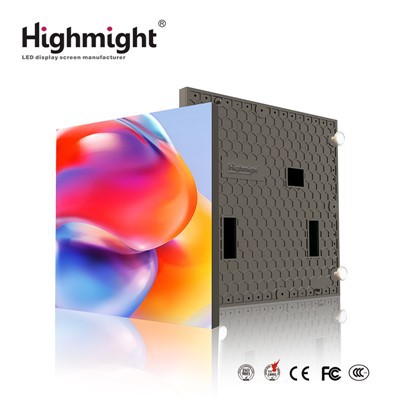



Hey there! I'm a supplier of naked eye 3D products, and I've been deep - diving into the world of this amazing tech for quite some time. One of the most crucial factors that can make or break the naked eye 3D experience is the viewing angle range. So, let's chat about how it affects our beloved naked eye 3D.
First off, what exactly is the viewing angle range? In simple terms, it's the range of angles from which you can stand in front of a naked eye 3D display and still see a proper 3D effect. Think of it like a cone in front of the screen. If you're within this cone, you'll get the full 3D experience, but step outside, and things start to go downhill.
Let's start with the positives of a wide viewing angle range. When a naked eye 3D display has a wide viewing angle, it's like throwing a big party. More people can join in on the 3D fun at the same time. For example, in a shopping mall, if you have a Naked Eye 3D Advertising Screen with a wide viewing angle, shoppers walking from different directions can all stop and be wowed by the 3D ads. It's great for businesses because it maximizes the reach of their advertising. They're not just targeting people standing directly in front of the screen; they're getting the attention of folks coming from the sides too.
Another cool thing about a wide viewing angle is that it gives you more freedom of movement. You don't have to stand stock - still like a statue to enjoy the 3D. You can walk around, look at the display from different perspectives, and the 3D effect remains intact. This is super important for interactive displays. Imagine a Naked Eye 3D Display in a museum. Visitors can move around, get up close, step back, and all the while, they're getting an immersive 3D view of the artifacts or exhibits. It makes the whole experience more engaging and dynamic.
Now, let's talk about the technology behind achieving a wide viewing angle. There are a few different methods. One common approach is using lenticular lenses. These lenses are like a series of tiny prisms on the surface of the display. They're designed to direct different images to different angles, so when you look at the screen from various positions, you see different parts of the 3D image. By carefully adjusting the shape and arrangement of these lenticular lenses, manufacturers can increase the viewing angle range.
However, it's not all sunshine and rainbows when it comes to wide viewing angles. There are some trade - offs. One of the main issues is image quality. As the viewing angle gets wider, the 3D effect can start to degrade. The colors might look less vibrant, and the depth perception can become less accurate. This is because the lenticular lenses have a harder time precisely directing the light to different angles over a wider range. So, while you can get more people to see the 3D, the experience might not be as top - notch for everyone.
On the flip side, a narrow viewing angle range has its own set of characteristics. A display with a narrow viewing angle is like a private concert. It's more exclusive. The advantage here is that the 3D effect can be really intense for the people within that narrow range. The colors are more vivid, and the depth perception is sharper. This can be great for applications where you want a highly focused and immersive experience, like in a home theater setup. If you have a Naked Eye 3D LED Large Screen in your living room, a narrow viewing angle can make you feel like you're right in the middle of the action, almost as if you're part of the movie.
But the obvious drawback is the limited number of people who can enjoy the 3D at once. You can't have a big group of friends over and expect them all to get the same 3D experience. And if you move even a little bit outside the narrow viewing angle, the 3D effect can quickly disappear. It's like walking out of the magic circle.
When it comes to choosing between a wide and narrow viewing angle for a naked eye 3D display, it all boils down to the application. For commercial settings like shopping malls, airports, or public events, a wide viewing angle is usually the way to go. You want to attract as many eyes as possible. On the other hand, for personal use, such as in a home or an office where you're looking for a more intimate 3D experience, a narrow viewing angle might be more suitable.
As a naked eye 3D supplier, I've seen firsthand how important it is to understand these viewing angle dynamics. We work closely with our clients to figure out the best viewing angle range for their specific needs. Whether it's a business looking to promote its products through 3D advertising or a homeowner wanting to upgrade their entertainment system, we have the expertise to recommend the right display.
If you're in the market for a naked eye 3D solution, I'd love to have a chat with you. We can discuss your requirements, the pros and cons of different viewing angle ranges, and find the perfect display for you. Whether you need a Naked Eye 3D Advertising Screen, a Naked Eye 3D LED Large Screen, or a Naked Eye 3D Display, we've got you covered. Don't hesitate to reach out and start the conversation about your next 3D project.


References:
- Research papers on lenticular lens technology for naked eye 3D displays
- Industry reports on the market trends of naked eye 3D products
- Case studies of commercial and personal applications of naked eye 3D displays