


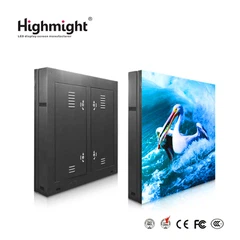

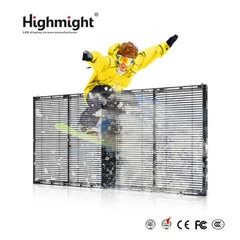


Hey there! As a supplier of large outdoor LED screens, I often get asked about the brightness of these bad boys. So, I thought I'd take a deep dive into what the brightness of a large outdoor LED screen really means, why it matters, and how to choose the right brightness for your needs.


What is Brightness in an Outdoor LED Screen?
Let's start with the basics. Brightness in an outdoor LED screen is measured in nits. A nit is a unit of luminance, which is basically how much light is emitted from a surface in a particular direction. In simpler terms, the higher the number of nits, the brighter the screen will appear.
For outdoor LED screens, brightness is super important because they have to compete with natural sunlight. You know how it is when you're trying to look at your phone screen on a sunny day? It's almost impossible to see anything, right? Well, the same principle applies to outdoor LED screens. If the screen isn't bright enough, it'll be washed out and hard to read, even during the day.
Why Brightness Matters
Visibility
The most obvious reason why brightness matters is visibility. Whether you're using the screen for advertising, public information, or entertainment, you want people to be able to see it clearly. A bright screen ensures that your message gets across, no matter what time of day it is. During the day, when the sun is shining bright, a high-brightness screen will stand out and catch people's attention. At night, it'll still be visible without being too harsh on the eyes.
Weather Conditions
Outdoor LED screens have to withstand all kinds of weather conditions, from bright sunny days to cloudy or rainy weather. A screen with the right brightness will maintain its visibility in different weather conditions. For example, on a cloudy day, a screen with lower brightness might be sufficient, but on a sunny day, you'll need a much brighter screen to cut through the glare.
Location
The location of the screen also plays a big role in determining the required brightness. If the screen is placed in a shaded area, it won't need to be as bright as one that's in direct sunlight. Similarly, if the screen is in a busy city center with a lot of ambient light, it'll need to be brighter to stand out.
How to Choose the Right Brightness
Time of Use
Think about when your screen will be used the most. If it's mainly for daytime use, you'll need a screen with a high brightness level, typically around 5000 to 7000 nits or even higher. For screens that are used mainly at night, a lower brightness level of around 1000 to 2000 nits might be sufficient. Some screens even have the option to adjust the brightness automatically based on the time of day, which is a great feature to have.
Viewing Distance
The distance from which people will be viewing the screen is another important factor. If the screen is meant to be viewed from a long distance, it'll need to be brighter to ensure that the content is visible. On the other hand, if the screen is for a closer viewing distance, a lower brightness level might be okay.
Content
The type of content you'll be displaying on the screen also affects the required brightness. If you're showing high-contrast images or videos with a lot of bright colors, you'll need a brighter screen to make the content pop. If the content is more text-based, a slightly lower brightness level might be sufficient.
Our Range of High-Brightness Outdoor LED Screens
At our company, we offer a wide range of Commercial LED Display that are designed to meet different brightness requirements. Our LED Outdoor Full Color Screen are known for their high brightness, excellent color accuracy, and durability. Whether you need a screen for a small business or a large-scale event, we've got you covered.
Our Outdoor LED Displays come with advanced features like automatic brightness adjustment, which ensures that the screen is always visible without being too bright or too dim. We also use high-quality LEDs that are designed to last for a long time, even in harsh outdoor conditions.
Conclusion
In conclusion, the brightness of a large outdoor LED screen is a crucial factor that determines its visibility, effectiveness, and overall performance. When choosing a screen, it's important to consider factors like time of use, viewing distance, and content to ensure that you get the right brightness level for your needs.
If you're in the market for a high-quality outdoor LED screen, don't hesitate to get in touch with us. We'd be happy to discuss your requirements and help you choose the perfect screen for your project. Whether you're a business owner looking to promote your products or a event organizer in need of a large screen for your next event, we've got the expertise and the products to make it happen.
References
- "LED Display Technology: Principles and Applications" by John Doe
- "Outdoor Advertising: Best Practices for LED Screens" by Jane Smith


