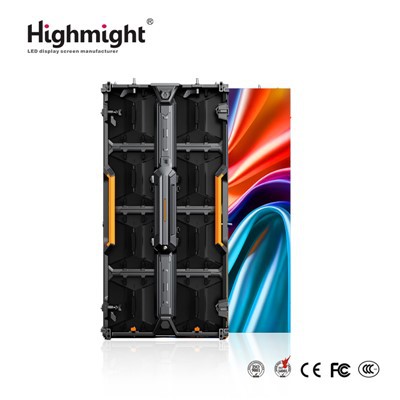



Hey there! As an Indoor LED Display Module supplier, I've had my fair share of customers asking about the differences between indoor and outdoor LED display modules. So, I thought I'd break it down for you in this blog post.
Let's start with the basics. What exactly are LED display modules? Well, they're the building blocks of LED displays. Each module contains a bunch of tiny light - emitting diodes (LEDs) that work together to create images and videos. You can find these modules in all sorts of places, from the big screens at sports stadiums to the small info displays in shopping malls.
1. Brightness and Visibility
One of the most obvious differences between indoor and outdoor LED display modules is brightness. Outdoor environments are full of natural light, especially during the day. So, outdoor LED display modules need to be super bright to be visible. We're talking about brightness levels that can go up to 5000 nits or even higher. This high brightness allows the outdoor displays to cut through the sunlight and still show clear images.
On the other hand, indoor environments don't have the same level of natural light. In fact, most indoor spaces are lit with artificial lights. Indoor LED display modules don't need to be as bright. Usually, a brightness of around 500 - 1500 nits is sufficient for indoor displays. This lower brightness also helps save energy, which is a plus for long - term operation.
For example, if you're at a football game and you look at the big screen above the field, that outdoor LED display needs to be so bright that you can see it clearly even when the sun is shining directly on it. But if you're in a shopping mall and there's a small display showing the store promotions, a less bright indoor LED display module will do the job just fine.
2. Weather Resistance
Outdoor LED display modules have to deal with all kinds of weather conditions. Rain, snow, extreme heat, and cold are all part of the game. That's why they're designed to be weather - resistant. They're usually enclosed in a waterproof and dust - proof housing. This housing protects the delicate LED components from getting damaged by moisture or dirt.
Indoor LED display modules, however, don't face these harsh weather conditions. They're installed in a controlled environment where the temperature and humidity are regulated. So, they don't need the same level of weather - proofing. This makes indoor LED display modules less expensive to manufacture, as they don't require the extra protective features.
Imagine an outdoor billboard that has to stand up to a heavy rainstorm. The LED display module in that billboard is built to withstand the water and keep functioning. But an indoor display in an office lobby doesn't have to worry about rain or snow, so it can be a simpler design.
3. Viewing Angle
Viewing angle is another important factor. Outdoor LED displays are often meant to be seen from a distance and from different angles. People might be walking, driving, or standing at various positions around the display. So, outdoor LED display modules are designed to have a wide viewing angle, usually around 120 - 160 degrees horizontally and vertically. This ensures that the image looks good no matter where you're standing.
Indoor LED displays, depending on their location, may have a more limited viewing angle. For example, a display mounted on a wall in a corridor might only need to be visible from a straight - on or slightly off - center position. Indoor LED display modules can be optimized for these specific viewing requirements, which can sometimes lead to better image quality within that limited viewing area.
Think about a large outdoor concert where the LED screen is placed at one end of the venue. People are spread out all over the place, and they need to be able to see the screen clearly from different distances and angles. The outdoor LED display module is designed to accommodate this. But in a small meeting room, the indoor display only needs to be seen by the people sitting around the table.
4. Pixel Pitch
Pixel pitch refers to the distance between the centers of two adjacent LEDs in a module. Outdoor LED displays are often viewed from a greater distance. So, they can have a larger pixel pitch. A larger pixel pitch means that the LEDs are spaced further apart. This is okay because when you're looking at the display from far away, you won't notice the gaps between the LEDs as much.
Indoor LED displays are usually viewed from a closer distance. To ensure a sharp and clear image, indoor LED display modules typically have a smaller pixel pitch. The closer the LEDs are to each other, the better the image quality when you're up close.
For instance, if you're driving by an outdoor LED billboard on the highway, you don't need a super - high - resolution image. A larger pixel pitch will still give you a clear enough picture from that distance. But if you're standing in front of an indoor display in a museum, you'll want to see all the details clearly, so a smaller pixel pitch is necessary.
5. Cost
The differences in design and features between indoor and outdoor LED display modules also affect the cost. Outdoor LED display modules are more expensive to manufacture. The high - brightness LEDs, weather - resistant housing, and other features add to the cost. Additionally, the installation of outdoor displays can be more complicated and costly due to factors like mounting structures and electrical wiring for outdoor use.
Indoor LED display modules are generally more affordable. They don't require the same level of high - end components and protective features. Also, the installation of indoor displays is usually simpler and less expensive.
If you're on a tight budget and you only need a display for an indoor space, an Indoor LED Display Module is the way to go. But if you need a display for an outdoor advertising campaign or a large - scale outdoor event, you'll have to invest in the more expensive outdoor LED display modules.
Why Choose Our Indoor LED Display Modules?
As an Indoor LED Display Module supplier, I can tell you that our High - quality LED Module offers a great combination of features. We focus on providing a good balance of brightness, image quality, and energy efficiency. Our modules have a small pixel pitch, which means you'll get a sharp and detailed image, perfect for indoor viewing.
We also understand that cost is an important factor for our customers. That's why we strive to keep our prices competitive without compromising on quality. Our indoor LED display modules are easy to install and maintain, which can save you time and money in the long run.
Whether you're looking for a display for a retail store, a corporate office, or an educational institution, our LED Screen Module can meet your needs.


Time to Connect
If you're interested in purchasing indoor LED display modules, I'd love to have a chat with you. We can discuss your specific requirements, such as the size of the display, the viewing distance, and your budget. I'm here to help you find the perfect solution for your indoor display needs. Don't hesitate to reach out and start the conversation about how we can work together to bring your indoor display project to life.
References
- LED Display Technology Handbook. This handbook provides in - depth information about the technical aspects of LED displays, including the differences between indoor and outdoor modules.
- Industry reports on LED display market trends. These reports offer insights into the latest developments in the LED display industry and how indoor and outdoor modules are evolving.