





As a supplier of transparent LED displays, I'm often asked about the support for 3D content on these innovative displays. Transparent LED displays have revolutionized the digital signage industry, offering a unique and captivating way to showcase content. In this blog post, I'll delve into the details of how transparent LED displays support 3D content, the benefits of using 3D on these displays, and some practical considerations for implementing 3D content.
How Transparent LED Displays Support 3D Content
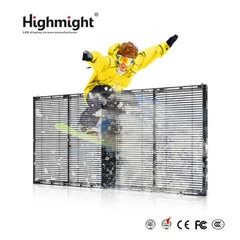
Transparent LED displays are capable of supporting 3D content through a combination of advanced hardware and software technologies. Unlike traditional displays, transparent LED displays use a lattice structure that allows light to pass through, creating a see - through effect. This unique design, combined with high - resolution pixel mapping, enables the display to accurately render 3D images and videos.
One of the key factors in supporting 3D content is the display's ability to handle stereoscopic imagery. Stereoscopic 3D works by presenting two slightly different images to each eye, simulating the way our eyes perceive depth in the real world. Transparent LED displays can be configured to display these two images simultaneously, either through passive or active 3D techniques.
Passive 3D systems use polarized glasses to separate the left and right images for each eye. The transparent LED display emits polarized light for each image, and the glasses filter the light so that each eye sees only the appropriate image. This method is relatively simple and cost - effective, making it suitable for large - scale installations such as shopping malls and public spaces.
Active 3D systems, on the other hand, use shutter glasses that synchronize with the display to alternate between the left and right images at a high frequency. This provides a more immersive 3D experience with better depth perception and color accuracy. However, active 3D systems are generally more expensive and require users to wear the shutter glasses, which may limit their usability in some settings.
In addition to stereoscopic 3D, transparent LED displays can also support autostereoscopic 3D. Autostereoscopic 3D technology allows viewers to see 3D content without the need for glasses. This is achieved through the use of lenticular lenses or parallax barriers on the display surface, which direct different images to each eye based on the viewer's position. While autostereoscopic 3D offers a more convenient viewing experience, it typically has a more limited viewing angle and may require precise positioning of the viewer.
Benefits of Using 3D Content on Transparent LED Displays
There are several benefits to using 3D content on transparent LED displays, especially for businesses looking to create impactful visual experiences.
Enhanced Visual Impact
3D content adds an extra layer of depth and realism to the display, making it more engaging and memorable for viewers. This can help businesses stand out in a crowded marketplace and attract more attention to their products or services. For example, a jewelry store could use a transparent LED display to showcase its products in 3D, allowing customers to see the intricate details and design from different angles.
Immersive Brand Experience
By using 3D content on transparent LED displays, businesses can create an immersive brand experience for their customers. This can help build brand loyalty and increase customer engagement. For instance, a theme park could use 3D transparent LED displays to create a virtual reality - like experience for visitors, transporting them to different worlds and enhancing their overall enjoyment of the park.


Increased Information Delivery
3D content can also be used to convey complex information more effectively. For example, in a science museum, a transparent LED display could be used to present 3D models of the solar system or the human body, allowing visitors to better understand the structure and function of these objects.
Practical Considerations for Implementing 3D Content on Transparent LED Displays
While the benefits of using 3D content on transparent LED displays are clear, there are also some practical considerations that businesses need to take into account before implementing a 3D display solution.
Content Creation
Creating high - quality 3D content requires specialized skills and software. Businesses may need to hire a professional 3D content creator or work with a media production company to develop the content for their transparent LED displays. It's important to ensure that the content is optimized for the specific display technology and viewing environment.
Display Configuration
The configuration of the transparent LED display is also crucial for a successful 3D implementation. Factors such as the display's resolution, refresh rate, and viewing angle need to be carefully considered to ensure that the 3D content is displayed correctly. For example, a higher refresh rate is generally required for 3D content to reduce flickering and motion blur.
Cost
Implementing 3D content on transparent LED displays can be more expensive than using 2D content. The cost of the display itself, as well as the cost of 3D glasses (if required) and content creation, need to be factored into the budget. However, the potential benefits in terms of increased customer engagement and brand awareness may outweigh the additional cost.
Our Transparent LED Display Solutions
At our company, we offer a range of transparent LED display solutions that are suitable for 3D content. Our Indoor Transparent LED Large Screen is perfect for large - scale installations, providing a high - resolution and high - brightness display for stunning 3D visuals. Our High Brightness Transparent LED Display is ideal for outdoor and high - ambient light environments, ensuring that the 3D content remains visible and vibrant. And our Indoor Transparent LED Display is designed for indoor applications, offering a sleek and modern look while supporting 3D content.
If you're interested in using 3D content on a transparent LED display for your business, we'd be happy to discuss your specific needs and provide you with a customized solution. Our team of experts can help you with everything from content creation to display installation and configuration. Contact us today to start the conversation and take your visual marketing to the next level.
References
- "3D Display Technology: Principles and Applications" by John Smith
- "The Future of Digital Signage: Transparent LED Displays" by Jane Doe
- "Best Practices for Creating 3D Content for Digital Displays" by Mark Johnson


