





Hey there! As a supplier of transparent LED displays, I often get asked about the support for remote control of these cool devices. So, let's dive right in and explore what that support actually looks like.
First off, why is remote control so important for transparent LED displays? Well, think about it. These displays are used in all sorts of places - from shopping malls and airports to corporate offices and event venues. Being able to control them remotely means you can easily change the content, adjust the brightness, and even schedule when the display should be on or off, all without having to be physically present at the display location. This not only saves time but also makes it super convenient for managing multiple displays across different locations.
One of the key aspects of remote control support is the software. Most modern transparent LED displays come with dedicated software that allows you to control the display from a computer, tablet, or even a smartphone. This software is usually user - friendly, with an intuitive interface that makes it easy for anyone to use, even if you're not a tech whiz.
With this software, you can create and edit content for your transparent led screen. You can add text, images, videos, and animations, and then arrange them in the way you want. For example, if you're using the display in a store, you can create a dynamic advertisement that shows different products throughout the day. And with just a few clicks, you can upload this new content to the display remotely.
Another great feature of the remote - control software is the ability to adjust the display settings. You can change the brightness of the display according to the ambient light in the environment. In a brightly lit area, you might want the display to be extra bright so that it stands out, while in a dimly lit room, you can lower the brightness to save energy and create a more comfortable viewing experience. You can also adjust the contrast, color saturation, and other visual parameters to ensure that the content looks its best.
Scheduling is also a big part of remote control support. You can set up a schedule for when the display should turn on and off, as well as when specific content should be shown. For instance, if you have a display in an office lobby, you can set it to turn on at 8 am and turn off at 6 pm. You can also schedule different types of content to be shown at different times of the day, like news updates in the morning and promotional videos in the afternoon.
Now, let's talk about the hardware side of remote control support. Most transparent LED displays are equipped with a network interface, such as Ethernet or Wi - Fi. This allows the display to connect to the internet and communicate with the control software. Some displays also support 4G or 5G connectivity, which is especially useful if you're using the display in a location where Wi - Fi or Ethernet is not available.
The network connection enables the display to receive commands from the control software and send back status information. For example, it can let you know if there are any technical issues with the display, such as a malfunctioning LED module or a low - power warning. This real - time feedback is crucial for quickly addressing any problems and ensuring that the display is always in good working condition.
In addition to the network connection, some transparent LED displays also support infrared (IR) or radio - frequency (RF) remote control. This can be handy for making quick adjustments on - site without having to use the software. For example, if you're at an event and you need to quickly change the volume or the display mode, you can use the IR or RF remote to do so.
When it comes to security, remote control support for transparent LED displays is taken very seriously. The software usually has built - in security features to protect your content and the display itself. It uses encryption to ensure that the data transmitted between the control device and the display is secure. This means that your content won't be intercepted or tampered with by unauthorized users.
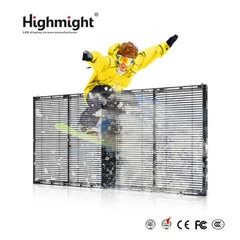
Now, let's take a look at some of the different types of transparent LED displays and how their remote control support might vary. LED Transparent Glass Display is a popular option, especially for storefronts and architectural applications. These displays often have advanced remote control features that are tailored to their specific use cases. For example, they might have more precise control over the transparency level, which can be adjusted remotely to create different visual effects.
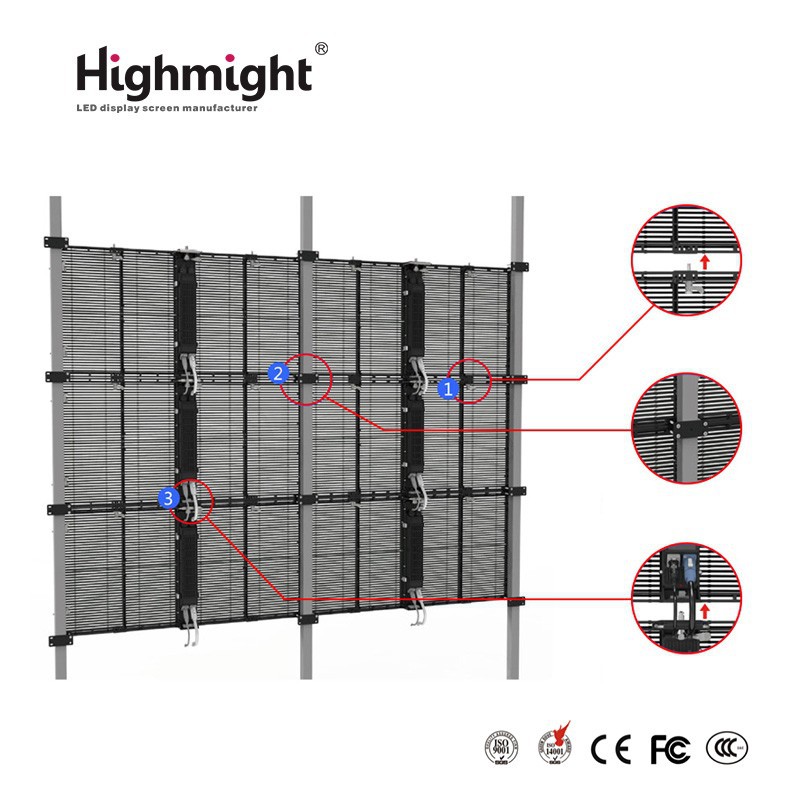
Transparent Led Panel is another type of display. These panels are often used in large - scale installations, such as in stadiums or convention centers. The remote control support for these panels usually focuses on managing multiple panels as a single unit. You can synchronize the content across all the panels, ensuring that the overall display looks seamless and coordinated.
In conclusion, the support for remote control of a transparent LED display is a powerful and versatile feature that offers a lot of benefits. Whether you're a business owner looking to promote your products, an event organizer wanting to create a dynamic experience, or an architect designing a modern building, remote control allows you to have full control over your display from anywhere.
If you're interested in learning more about our transparent LED displays and their remote control capabilities, or if you're thinking about making a purchase, I'd love to hear from you. Just reach out to us, and we can have a chat about how our products can meet your specific needs. We're always happy to help and look forward to working with you!
References

- Industry reports on transparent LED display technology
- Manufacturer's documentation for transparent LED displays and their remote - control software


