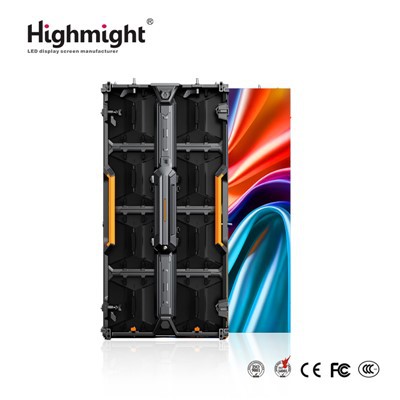



Hey there! As a supplier of Indoor LED Rental Displays, I often get asked about the viewing angle of these nifty devices. So, I thought I'd sit down and write a little something to clear up any confusion and give you the lowdown on what the viewing angle of indoor LED rental displays really means.
First off, let's talk about what a viewing angle is. In simple terms, the viewing angle of an LED display is the maximum angle from which you can view the screen without experiencing a significant loss in image quality. This includes things like color accuracy, brightness, and contrast. When we're talking about indoor LED rental displays, a good viewing angle is crucial because you want everyone in the room to have a great view of the content, whether they're sitting right in front of the screen or off to the side.
There are two types of viewing angles we usually consider: the horizontal viewing angle and the vertical viewing angle. The horizontal viewing angle refers to how far you can move to the left or right of the display and still see a clear image. The vertical viewing angle, on the other hand, is about how far you can move up or down.
For indoor events, having a wide horizontal viewing angle is super important. You might have a large auditorium or a conference hall filled with rows of seats, and you want everyone to be able to see the display clearly. A display with a narrow horizontal viewing angle means that people sitting at the edges of the room won't have a good view, and they might miss out on important details.
Let's say you're hosting a corporate event, and you've rented an Indoor LED Rental Display to showcase your company's latest products or to give a presentation. If the display has a narrow horizontal viewing angle, people sitting in the back rows or at the sides of the room might only see a washed-out or distorted image. This can be a real buzzkill for your event and might leave a negative impression on your guests.
So, what's a good horizontal viewing angle for indoor LED rental displays? Well, most high-quality displays these days offer a horizontal viewing angle of around 140 to 160 degrees. This means that you can have people sitting quite far to the left or right of the display and still get a clear, sharp image. Some top-of-the-line displays even offer a horizontal viewing angle of up to 180 degrees, which is pretty much as wide as it gets.
The vertical viewing angle is also important, but it's usually less of a concern for indoor events. In most cases, people will be sitting at a similar height to the display, so you don't need as wide a vertical viewing angle. A vertical viewing angle of around 120 to 140 degrees is usually sufficient for indoor setups.
Now, you might be wondering how the viewing angle is measured. Manufacturers typically use a method called the half-brightness point. This means that they measure the angle at which the brightness of the display drops to half of its maximum value. So, when a display is advertised as having a 160-degree horizontal viewing angle, it means that at 80 degrees to the left and 80 degrees to the right of the center of the display, the brightness will be half of what it is when you're looking at the display straight on.
Another factor that can affect the viewing angle is the pixel pitch of the display. Pixel pitch refers to the distance between the centers of two adjacent pixels. A smaller pixel pitch generally means a higher resolution and a better viewing angle. Displays with a small pixel pitch can produce a clearer image from a wider range of angles because the pixels are closer together, and there's less chance of the image looking pixelated or distorted when viewed from the side.


If you're planning an event that requires a high level of detail, like a product launch or a live performance, you might want to consider renting a High-resolution Indoor LED Rental Display. These displays usually have a smaller pixel pitch and can offer a better viewing angle, as well as a more immersive viewing experience.
When it comes to choosing the right indoor LED rental display for your event, it's not just about the viewing angle. You also need to consider things like the size of the display, the brightness, the resolution, and the overall quality of the image. But the viewing angle is definitely an important factor that can make or break the success of your event.
For example, if you're hosting a trade show booth, you want to make sure that your display can attract the attention of people walking by from all directions. A display with a wide viewing angle will make it easier for people to see your content from a distance and will increase the chances of them stopping by your booth to learn more about your products or services.
If you're still not sure which display is right for your event, don't worry! That's what we're here for. As a supplier of LED Rental Display Rental for Indoor Events, we have a team of experts who can help you choose the perfect display based on your specific needs and requirements. We can take into account factors like the size of the venue, the number of guests, and the type of content you'll be displaying to recommend the best display for your event.
So, if you're in the market for an indoor LED rental display, don't hesitate to reach out to us. We're always happy to answer your questions and help you find the right solution for your event. Whether you're planning a small corporate meeting or a large-scale concert, we have the perfect display for you.
In conclusion, the viewing angle of indoor LED rental displays is an important factor to consider when planning an event. A wide viewing angle ensures that everyone in the room can enjoy a clear, sharp image, regardless of where they're sitting. By choosing a display with a good viewing angle, you can enhance the overall experience for your guests and make your event a success.
If you have any questions or would like to discuss your options further, feel free to get in touch with us. We're looking forward to helping you create an unforgettable event with our top-quality indoor LED rental displays.
References:
- Industry knowledge and experience as an Indoor LED Rental Display supplier.
- Manufacturer specifications and technical documents for indoor LED rental displays.